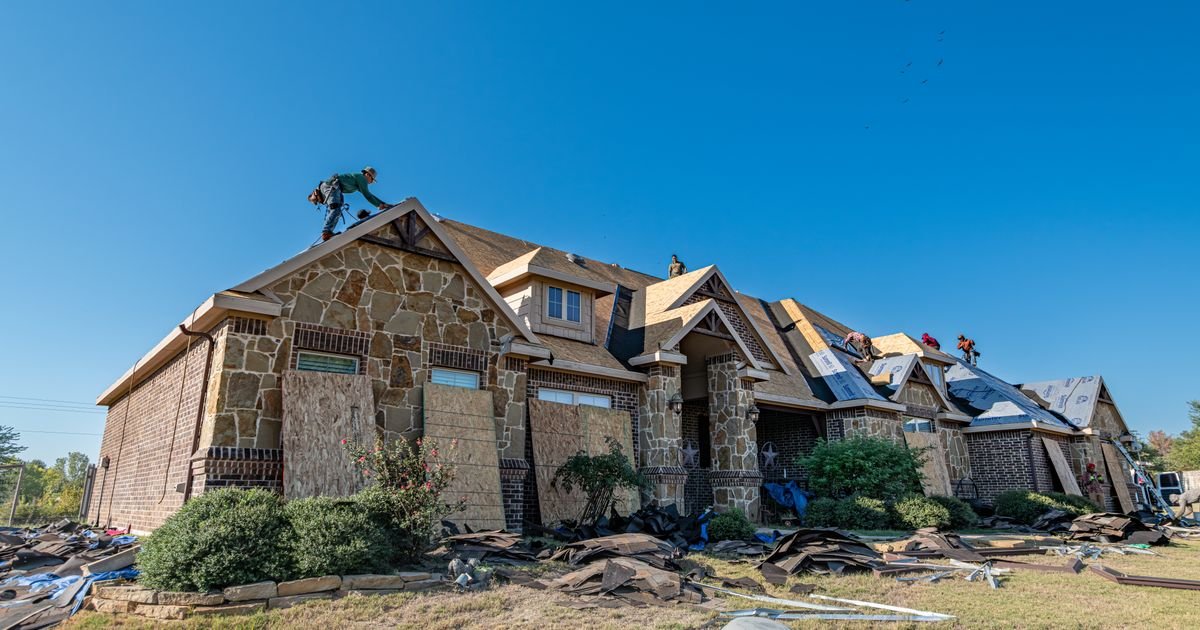

A hailstorm can bruise every shingle on a roof and leave almost nothing you can see from the ground. That is what makes a hail damage roof inspection different from a normal roof check. It is not a quick look for missing shingles. It is a measured search for impact marks, soft spots and collateral dents, recorded slope by slope, so you know whether the roof is fine, repairable or ready for an insurance claim.
This guide explains what a hail damage roof inspection covers, what hail damage looks like on every common roofing material, what the inspection costs, how the 8 hit test square rule works, and the exact claim steps that get roofs paid for. It is the pillar guide for our insurance and storm claims cluster, so it also links out to the repair and material guides that cover each next step in detail.
When You Need a Hail Damage Roof Inspection
Book an inspection within a week or two if hail the size of a pea or larger fell on your roof, if you heard hail hitting the roof, or if neighbours are posting photos of ice covered yards. Do not wait for a leak. By the time a ceiling stain appears, water has already travelled through the shingle layer, the underlayment and the decking, and the repair bill has grown.
A ground level check is worth doing the same day, but it is not a substitute for a roof level inspection. Most hail damage is invisible from the ground. The signs you can see from the lawn tell you the storm hit hard enough to warrant a closer look. They never clear the roof.
Get an inspection even when the roof looks fine if any of these apply:
- Hail reached three quarters of an inch or larger, about marble size
- The storm also brought strong wind, which can lift shingles and break seal strips
- The roof is more than 10 years old, since older shingles bruise under smaller hail
- Granules are piling up in the gutters or at the bottom of downspouts
- Gutters, vents, siding or window screens show dents
Insurers set filing deadlines, often 6 months to 2 years from the storm date, and some policies require notice within 30 to 60 days. An early inspection preserves your options even if you decide to watch the roof and hold off on repairs. A late inspection makes it harder to prove which storm caused the damage, because every month of sun and rain weathers the impact marks.
What Hail Damage Looks Like on a Roof
Hail damage rarely looks like a hole. On asphalt shingles it usually shows up as roughly circular dents or bruises where the granule surface has been crushed into the asphalt mat beneath, or knocked off entirely. Fresh strikes share a set of characteristics that inspectors look for.
Random distribution. Hail does not aim. Strikes scatter across a slope and tend to concentrate on the slopes that faced the storm wind. Damage that follows a neat pattern, or appears only on the sun baked south and west slopes, points to age and weathering instead.
Granule loss with exposed mat. The impact knocks protective granules loose and reveals fresh asphalt and fibres underneath. Freshly exposed asphalt is black and shiny. It oxidises toward grey over months of sun exposure, which is one reason an inspector can estimate how old a mark is.
Mat fracture. A hard hit bruises or cracks the fibreglass mat under the asphalt. Press gently with a gloved hand and the spot feels soft or spongy, like a bruise on an apple. That soft spot is functional damage. The shingle will crack and leak over time even though it looks intact today.
Collateral strikes on soft metals. Hail that dents shingles also dents everything else it hits that day: aluminium ridge vents, gutters, downspouts, window screens and the fins on the air conditioning condenser. Soft metal dents act as a calibration record for the storm. Their size tells an inspector how big the hail was and how hard it fell, independent of anything on the shingles. When shingles show damage and the soft metals on the same slope show nothing, that mismatch is evidence the marks are not hail.
Hail Damage by Roofing Material
Asphalt shingles. The most common case and the hardest to judge from the ground. Look for circular impact marks, missing granules, soft bruised spots and cracked shingles. According to Owens Corning, hail damage on asphalt shingles often appears as random dents with granule loss, and it can be difficult for an untrained eye to distinguish from normal wear, which is exactly why a professional inspection matters.
Metal roofing. Metal panels dent well before they fail. Dents are usually cosmetic, but a hard hit can loosen fasteners, break the factory coating at seams, or crease a panel enough to trap water. Many policies carry cosmetic damage exclusions for metal roofs, so the inspection has to answer whether the impact compromised the coating, seams or fasteners, not just whether it left a dent. Our guide to how long a metal roof lasts explains how coating damage shortens metal roof life.
Wood shakes. Hail splits shakes along the grain with clean, sharp fracture lines. Weathering cracks look fibrous and rough by comparison. Splits allow direct water entry, so insurers take wood shake hail damage seriously.
Tile roofing. Clay and concrete tile is hard but brittle. Hail cracks tiles or chips corners, sometimes in ways that are hard to spot from a distance. A cracked tile that looks minor can let water reach the underlayment, which is the real waterproofing layer on a tile roof. Our composite roof tiles guide covers the tile families and their hail performance in detail.
Flat and low slope membranes. On TPO and PVC, hail leaves concentric circular fractures and star shaped cracks radiating from the impact point, sometimes with exposed scrim. On EPDM rubber the surface often looks fine while the insulation beneath is crushed, so a surface check alone can miss most of the damage. Modified bitumen shows granule loss, splits at seams and punctures. Our roof membrane pillar explains each membrane type and how it fails.
What Size Hail Damages a Roof
The National Weather Service classifies hail as severe at 1 inch in diameter, about the size of a quarter. That is a reasonable working threshold for functional damage to asphalt shingles in decent condition. Smaller hail can still matter at the margins, and larger hail is destructive at any roof age.
| Hail Size | Common Comparison | Likely Roof Damage |
|---|---|---|
| Quarter inch | Pea size | Minor surface dings, little risk to a newer asphalt roof |
| Half to three quarter inch | Marble size | Granule loss and cracking, especially on aging roofs |
| 1 to 1 and three quarter inch | Golf ball size | Punctures, severe granule loss, leaks on any roof |
| 2 inches and larger | Baseball size | Catastrophic damage, major punctures, structural issues |
Material changes the threshold. Wood shakes split at smaller sizes than concrete tile cracks. Metal panels dent cosmetically well before they fail functionally. Age changes it too. A 20 year old shingle takes damage a 5 year old shingle would shrug off, because the asphalt has already lost flexibility.
Wind matters as much as size. Hail driven by strong wind hits harder and at an angle, which is why damage concentrates on windward slopes and why a storm with modest hail plus high wind can still bruise a roof badly.
The Ground Level Check You Can Do Yourself
Start from the ground. Never climb onto a wet, possibly damaged roof yourself. A post storm roof is slippery, and a hail bruised slope can hide soft spots underfoot. Walk the perimeter of the house with your phone and look for these clues:
- Dented gutters and downspouts. Dimples on the leading edge of aluminium gutters are a reliable indicator. If the gutters are dented, the roof took hits too.
- Granules in gutters and downspouts. Piles of coarse sand like material at the bottom of a downspout mean hail knocked granules off the shingles and washed them down.
- Dented vents and flashing. Metal roof components showing impact marks confirm hail reached the roof surface.
- Damaged siding and window screens. Dings, chips and torn screens on the sides of the house show the storm hit hard.
- Shingle debris in the yard. Pieces of shingle on the lawn or driveway mean impacts tore material loose.
- Spatter marks. Clean light coloured spots where hail knocked dust and oxidation off fences, siding and oxidized metal. Spatter fades fast with weathering, so it is useful evidence only in the first days after a storm.
- Hailstones themselves. Photograph hail next to a coin for scale before it melts. Save local weather reports confirming hail fell in your area.
Photograph everything with time stamps, from multiple angles, wide shots and close ups. Note the storm date and when you first noticed damage. This ground level record is the start of the evidence trail your insurer needs, and it costs nothing.
What a Professional Hail Damage Roof Inspection Includes
A real inspection is more than walking the roof and saying it looks fine. A thorough inspector works slope by slope and writes down what was found where. Here is what to expect.
1. Exterior and collateral survey. Before climbing up, the inspector photographs gutters, downspouts, vents, flashing, siding, window screens, skylights and the air conditioning condenser. These soft metal strikes calibrate the storm and confirm hail actually fell at this address.
2. Slope by slope mapping. Every slope is examined and photographed, with damage plotted by location and orientation. Directionality is often evidence of a storm event, since hail concentrates on windward slopes while age damage concentrates on the sunniest slopes.
3. Test squares. The inspector chalks out 10 foot by 10 foot squares on each slope, usually on the windward sides first, and identifies, chalks, measures and photographs every impact inside each square. This converts “the roof has hail damage” into a defensible count per 100 square feet.
4. Bruise testing. Suspect shingles are pressed gently with gloved hands to feel for the soft spot that signals a fractured mat. A mark that looks like hail but feels firm may be a blister or a scuff instead.
5. Penetration and flashing check. Pipe boots, chimney flashing, valley metal, skylights and ridge caps are inspected closely. These are the weak points where a hail loosened seal becomes a leak first.
6. Attic and interior check. The inspector looks in the attic for wet underlayment, stained decking and daylight through the roof, and inside for ceiling stains. A roof leak that shows up indoors started at a specific roof defect, and the attic often reveals which one. Our guide to roof leaks in heavy rain explains how to trace a leak back to its entry point.
7. Written report with photos. You should receive a written report: slopes inspected, test square counts, photos of each impact, collateral damage noted, and a recommendation to repair, monitor or replace. Ask for this in writing before the inspection starts. A verbal “looks fine” is useless in a claim.
A forensic engineering inspection goes further. The engineer adds certified weather record correlation, impact measurement against the hail history for your address, and a sealed report stating opinions to a reasonable degree of engineering certainty. That level is usually only needed when a claim is disputed or denied, or when the case may go to appraisal or court.
Hail Damage vs Age and Normal Wear
This is the question at the centre of almost every disputed hail claim, and it has physical answers. Aging and hail follow different patterns, and a good inspector reads them separately.
Aging follows the sun and the water. Thermal cracking, blistering and granule loss from weathering show up systematically, worst on south and west facing slopes that take the most sun, along drainage paths and at penetrations. Hail is an isolated event. Its strikes can be tied to a specific storm date through weather records.
Blisters and bruises behave differently. A heat blister is a raised bubble that pops outward, often with granules intact around a small open crater. A hail bruise is driven inward, with fractured mat beneath. Under close inspection they do not look the same, and counting blisters toward a hail threshold is one of the most common adjusting errors.
Wear does not dent metal like hail does. An aging roof has aged gutters, but they do not generally carry rounded dents consistent with hailstones of a particular size from a storm at the same location. When the shingles show damage and the soft metals show nothing, the mismatch counts against hail.
Old damage weathers, new damage does not. Freshly exposed asphalt is black and shiny. It oxidises toward grey over months of sun exposure, and displaced granule edges soften. The weathering state of an impact mark is one of the ways an inspector brackets when the strike happened.
Hail spatter fades fast. The clean spots hail leaves on dirty surfaces disappear with weathering in days or weeks. Spatter present means the storm was recent. Spatter absent does not prove there was no storm, but it removes one piece of timing evidence.
If the roof is old, an honest inspector will say so. Hail on a 20 year old roof is still hail, but the claim conversation changes, because the insurer will weigh the roof remaining life and whether individual shingles can be repaired without damaging brittle surrounding material.
The 8 Hit Rule and When Repair Becomes Replacement
A common adjusting convention is that around 8 or more qualifying impacts within a 100 square foot test square is the threshold for replacing a slope. It is a convention, not a law, and it gets misapplied in both directions: counting blisters and scuffs toward the threshold, or dismissing genuine mat fractures as cosmetic to stay under it.
The engineering questions that actually matter are:
- Are the marks hail impacts at all?
- Is the mat fractured, which is functional damage, or merely scuffed, which is cosmetic?
- Can the affected shingles be repaired without damaging surrounding brittle material?
On an aging roof, repairability is often the real battleground. Individually replacing shingles in a 15 year old field can create more damage than it fixes, which is how a repairable count becomes a full slope replacement in practice. A hail inspection answers the threshold question and the repairability question together.
Replacement usually makes more sense than repair when damage covers more than about half the roof, when the roof is near the end of its life, when repair costs approach half the cost of a new roof, or when the shingles are discontinued and cannot be matched. If the damage is limited to a few shingles or one slope, a repair is the right call, and a roof leak repair can often be done the same week.
How Much a Hail Damage Roof Inspection Costs
A professional hail inspection typically costs 125 to 600 dollars, depending on roof size, pitch and whether the inspector provides a written report with photos. Many roofing contractors offer the inspection free, because it is also a sales call, and will credit the inspection fee toward repairs if you hire them.
A forensic engineering inspection costs considerably more, usually 800 to 2,500 dollars, because it includes certified weather data, measured test squares and a sealed report. It is worth the cost only when a claim is disputed, when the carrier has denied coverage, or when the amount at stake justifies expert evidence.
What you should not pay for is a door to door inspector who appears the day after a storm, pressures you to sign a contingency agreement on the spot, and wants to file the claim for you before any inspection has happened. Those are storm chasers. A legitimate local contractor inspects first, recommends second, and never asks you to sign away claim control at the front door.
Hail Damage Repair and Replacement Costs in 2026
Repair costs depend on how much of the roof is damaged and what it is made of. Figures below come from published 2026 contractor and marketplace data and vary by region and contractor, so treat them as ranges and get itemised quotes.
| Severity | What It Covers | Typical Cost |
|---|---|---|
| Minor repair | A few damaged shingles, a flashing reseal | 150 to 1,000 dollars |
| Moderate repair | Multiple damaged areas, flashing and vent work | 1,000 to 5,000 dollars |
| Major repair or replacement | Widespread damage, leaks, full slope or full roof | 5,000 to 15,000 dollars and up |
Today’s Homeowner, using Angi data, puts the average hail damage repair at around 4,250 dollars, with a range of 375 to 7,500 dollars. Roof Medic reports repair work averaging 4 to 7 dollars per square foot, with a typical repair near 940 dollars and extensive damage running much higher. For a full replacement after severe hail, expect roughly 7,400 to 10,500 dollars for a 2,000 square foot roof in asphalt shingles, and more for metal, tile or premium shingles. Our average roof replacement cost guide breaks replacement pricing down by material and roof size.
Factors that move the price: the extent of damage, the roofing material, roof pitch and accessibility, local labour rates, and whether gutters, flashing, skylights or vents also need work. Premium materials like slate or tile cost more to repair than asphalt, and a steep or complex roof adds labour.
The Insurance Claim Steps After a Hail Inspection
About three quarters of the work storm roofing contractors do involves insurance claims, and the order of operations matters. Follow these steps in sequence.
1. Document the damage. Photograph the roof from the ground, the gutters, the yard debris and any interior stains. Record the storm date and save local weather reports confirming hail. Keep a log of every call and interaction from this point on.
2. Call a contractor before your insurer. This is the single most important step. An independent inspection catches damage the adjuster might miss and gives you documented evidence before the carrier sets the scope. Choose a contractor experienced with insurance claims and based locally, and avoid out of state crews who door knock after storms.
3. File the claim promptly. Report the damage within your policy window, typically 30 to 60 days for notice, and well inside the outer filing deadline of 6 months to 2 years. Have your policy number, the storm date and your documentation ready. The carrier assigns a claim number and schedules an adjuster visit.
4. Meet the adjuster with your contractor present. A roofer who knows claims will walk the roof with the adjuster, point out damage they might miss, and make sure the scope reflects the full extent of the damage. North facing and rear slopes get less attention from adjusters, as do gutters, vents, flashing and skylights. Confirm everything identified is written into the scope.
5. Review the settlement and supplement if needed. Almost every initial estimate misses something. Your contractor can file a supplement to add missing items like starter strips, drip edge and code upgrades. Understand the payments: the carrier usually pays actual cash value first, then the recoverable depreciation once the work is complete and documented. The deductible applies once per claim, not per item.
Most homeowners policies cover hail as a named peril, but coverage disputes focus on causation, meaning hail versus wear or prior damage, and timing, meaning which storm and which policy period. Those are exactly the questions a measured inspection answers. Today’s Homeowner reports an average insurance payout for hail damaged roof repairs of around 12,000 dollars, though the amount depends on the roof age and condition, the material, the deductible and whether the damage warrants repair or full replacement.
What to Do If Your Hail Claim Is Denied
A denial is not the end of the claim. Most disputed hail claims never see a courtroom. They get resolved in appraisal, mediation or settlement once the technical facts are established.
Read the denial letter carefully. It should state the reason: no hail damage found, damage attributed to wear, damage predates the policy period, or the claim was filed late. Each reason needs a different response.
Get the roof documented before it is repaired. Once the physical evidence is gone, the argument falls to interpreting other people’s photographs. If a claim is likely to be disputed, document the roof in place before any contractor touches it.
Request a reinspection. Ask the carrier to send a different adjuster, and have your contractor present with the test square counts and photos.
Consider a forensic engineer. When causation or timing is the dispute, a sealed engineering report with weather correlation narrows what is genuinely in dispute. It is the evidence that holds up in appraisal and under cross examination.
Know the appraisal clause. Most policies include an appraisal process where each side names an appraiser and the two choose an umpire. It is faster and cheaper than litigation and it is designed for exactly this kind of valuation dispute.
Check the filing deadline for disputes. Appraisal and legal deadlines run from the denial date in many states, so do not let a denied claim sit while the roof keeps leaking. Temporary tarping and a roof leak repair protect the home while the claim is argued.
What to Ask Before You Hire a Hail Inspector
Not every inspector is equal, and the quality of the inspection decides the quality of the claim. Ask these questions before anyone climbs the roof:
- Are you licensed and insured in this state, and how long have you worked in this area?
- Will I receive a written report with test square counts and photos, and when?
- Do you chalk test squares on every slope or only the worst one?
- Will you check the attic and the soft metals, not just the shingles?
- Do you handle insurance claims regularly, and will you be present for the adjuster visit?
- Is there a fee, and is it credited toward repairs if I hire you?
- Will you put the recommendation in writing: repair, monitor or replace?
A contractor who cannot answer these plainly, who wants a signed contingency agreement before inspecting, or who promises a free roof before seeing the damage, is selling, not inspecting. The National Roofing Contractors Association is a good place to start when vetting any roofer credentials, and a local residential roofing contractor with a real address in your area is a safer choice than a crew that arrived with the storm.
Does a Hail Inspection Affect Your Premiums
An inspection by itself does not raise your premium. Filing a claim can, depending on your state, your carrier and your claim history. Some states restrict premium increases after a single weather claim, others do not. A paid hail claim can also make it harder to switch carriers or renew, which is why the inspection matters before you file: it tells you whether the damage is worth claiming at all.
If the inspection finds only cosmetic dents on a metal roof, or a handful of scuffs below the replacement threshold, filing may cost more in future premiums than the repair is worth. If it finds fractured mats across multiple slopes, the claim is usually worth filing, because the damage will only get worse and the repair cost dwarfs any premium change. If the hail damage is on a metal roof, ask specifically whether the policy has a cosmetic damage exclusion, since that clause decides many metal roof claims on its own.
Frequently Asked Questions
How do I know if my roof has hail damage? Most hail damage is not visible from the ground. Look for dented gutters, granules washed into downspouts, dings on siding and window sills, and shingle debris in the yard. These are signs a storm hit hard enough to warrant a professional roof level inspection, which is the only reliable way to confirm shingle bruising and granule loss.
How much does a hail damage roof inspection cost? A professional inspection typically costs 125 to 600 dollars, and many local contractors offer it free or credit the fee toward repairs. A forensic engineering inspection with a sealed report usually costs 800 to 2,500 dollars and is only needed when a claim is disputed or denied.
What size hail damages a roof? Hail of 1 inch, about quarter size, is the severe threshold for functional damage to asphalt shingles in decent condition. Hail of three quarters of an inch can damage aging roofs, and hail of 1 and a quarter inches or larger can puncture shingles and crack tile on any roof.
How long do I have to file a hail damage claim? Filing deadlines are typically 6 months to 2 years from the storm date, but many policies require notice within 30 to 60 days. File as soon as you suspect damage, and let a contractor who handles claims regularly help you document and time the claim correctly.
Will insurance cover my hail damaged roof? Usually yes, if the damage comes from a documented storm. Homeowners insurance typically covers sudden hail and wind damage, but not age or wear. Filing promptly with strong documentation and an experienced contractor gives you the best chance at a full settlement.
Should I repair or replace my hail damaged roof? It depends on the extent. If damage is limited to a few shingles or one slope, a repair makes sense. When damage covers more than about half the roof, the roof is near the end of its life, or repair costs approach half of replacement, replacement is the better investment. An honest inspection tells you which applies.
Can small hail damage a roof? Hail under 1 inch does not generally cause functional damage to an asphalt shingle roof in serviceable condition. Older, brittle shingles can fracture under smaller hail, and hail density matters too. The real answer comes from the roof itself, including the mat condition under the impact marks.
What is a test square in a hail inspection? A test square is a marked 10 foot by 10 foot area on a roof slope where the inspector identifies, chalks, measures and photographs every hail impact. The count per square is the standard way to judge whether a slope qualifies for replacement, with around 8 or more qualifying impacts commonly used as the threshold.
After a hailstorm, the roof you cannot see clearly is the roof that costs the most later. Get a measured inspection, document everything, and file with evidence in hand. For the next steps, see our guides to leaking roofs and average roof replacement cost. For a free inspection and an itemised quote in the Tyler area, contact our team.