
A cedar roof is the most beautiful roof you can put on a house, and one of the most expensive. In 2026, a cedar shake roof costs $6 to $15 per square foot installed, with most homeowners paying $15,800 to $30,000 for a full roof, an average of about $21,000, according to Angi cost data from verified customer projects. That is roughly 1.5 to 2.5 times the installed cost of standard architectural asphalt shingles, and the premium buys real things: a roof that can last 40 to 50 years in the right climate, natural insulation that beats asphalt, and a look no manufactured material fully copies.
It also buys real obligations. Cedar is a natural wood product. It needs the right grade, the right installer, the right climate, and regular maintenance, or it will fail years before its expected lifespan. This guide covers every part of that decision: shakes versus shingles, the grades that matter, 2026 costs by type and roof size, lifespan by climate, fire ratings and code rules, installation details, and maintenance. If you want the cedar look without the upkeep of real wood, read our guide to composite roof tiles first, then come back and compare.
What Is Cedar Roofing
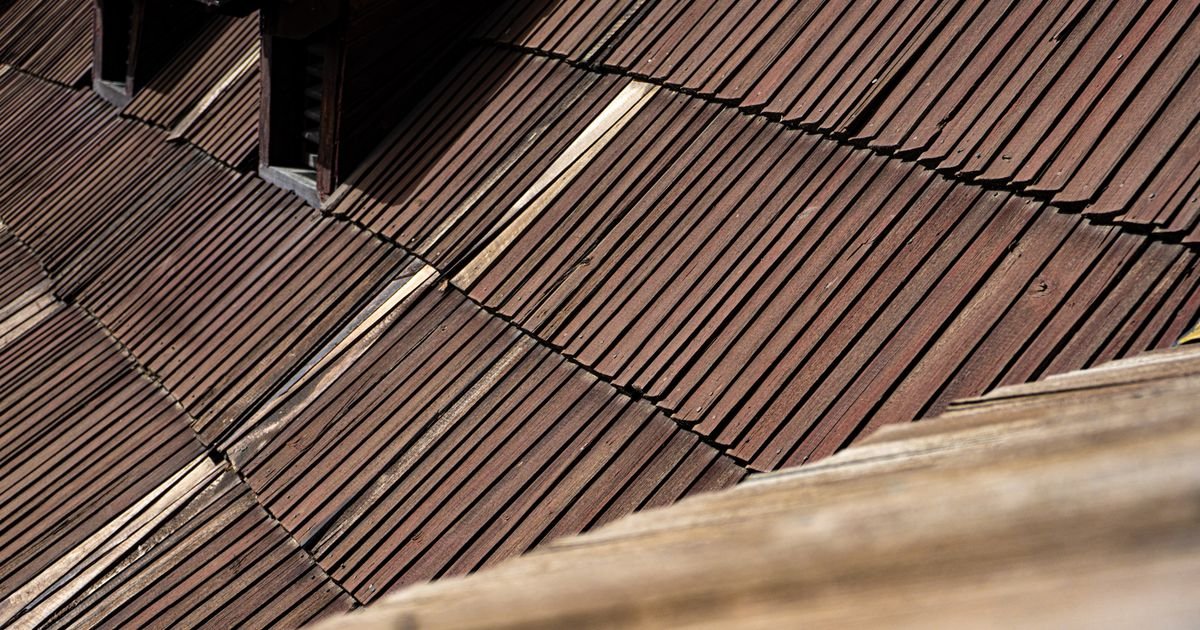
Cedar roofing is a steep slope roof covering made from solid wood, installed as individual shingles or shakes that overlap in courses. Unlike asphalt or metal, which are manufactured products, each piece is a cut of real cedar, so no two pieces look exactly alike. That variation is the whole point. A cedar roof has depth, shadow lines, and a warm color that changes as it weathers, usually from reddish brown to a silvery gray over several years.
Almost all certified cedar roofing in North America is Western Red Cedar, known botanically as Thuja plicata, grown in British Columbia and the Pacific Northwest of the United States. Its heartwood contains natural oils called thujaplicins that resist fungal decay, insects, and moisture, which is why this one species has dominated wood roofing for more than a century. A second species, Alaskan Yellow Cedar, is denser, harder, and more dimensionally stable, with even stronger natural decay resistance. It costs more, comes from fewer mills, and is usually specified for high UV mountain environments and demanding coastal markets.
Cedar roofing is not one product. It comes as shingles and shakes, in several lengths, several grades, and with or without preservative and fire retardant treatments. The choices you make among those options decide most of what the roof will cost and how long it will last, so they are worth understanding before you talk to a contractor.
Cedar Shakes vs Cedar Shingles
Homeowners and even some contractors use the two words as if they mean the same thing. They do not, and the building code treats them as different products under different sections.
A cedar shingle is sawn smooth on both faces by machine and tapered evenly from butt to tip. It is thinner, lighter, and more uniform, and it produces a crisp, clean roofline that suits Craftsman bungalows, cottages, and traditional homes. A cedar shake is thicker and heavier. In its traditional hand split and resawn form, the exposed face is split along the wood grain rather than sawn, which gives a deeply textured, rustic surface with strong shadow lines that no machine cut product exactly copies.
Between the two sits the tapersawn shake: sawn smooth on both sides like a shingle, but milled to shake thickness. It gives a cleaner, more defined shadow line than a hand split shake while keeping the visual weight of a shake, and many architects specify it for custom homes for exactly that middle ground.
| Feature | Cedar Shingles | Cedar Shakes |
|---|---|---|
| How it is made | Machine sawn smooth on both faces | Hand split face, or sawn to shake thickness |
| Look | Crisp, uniform, refined | Thick, rustic, deep shadow lines |
| Thickness | Thinner, lighter | Much thicker and heavier |
| Installed cost per square foot | $6 to $11 | $8 to $16 |
| Typical lifespan | 20 to 40 years | 30 to 50 years |
| Minimum roof slope | 3:12 | 4:12 |
| Felt interlayment between courses | Not required | Required for hand split shakes |
| Best for | Traditional and Craftsman style homes | Rustic, lodge, and high end custom homes |
The code line matters in practice. The International Residential Code covers wood shingles under section R905.7 and wood shakes under section R905.8. Shingles need a minimum slope of 3:12. Shakes need 4:12. Hand split shakes also require an 18 inch wide strip of felt interwoven between every course, which shingles do not. If a contractor quotes shakes for a low slope roof, or skips the interlayment, the installation is not code compliant.
Types of Cedar Roofing
Within the shingle and shake families, the length of the piece and the way it is cut decide the look, the exposure, and the price.
Certigrade Cedar Shingles, 16 Inch
The shortest standard shingle length, often called Fivex. Machine sawn on both faces, with random widths from 3 inches minimum. Maximum exposure is 5 inches at slopes of 4:12 and steeper. Four bundles cover one square. It is often used on lower pitch steep slope applications and secondary roof planes. No. 1 grade lasts 20 to 35 years in moderate climates.
Certigrade Cedar Shingles, 18 Inch
The most common residential cedar shingle length, often called Perfection. Machine sawn, random widths from 3 inches minimum. Maximum exposure is 5.5 inches at slopes of 4:12 and steeper. Four bundles cover one square. This is the standard specification for residential cedar shingle reroofing across the United States and Canada. No. 1 grade lasts 25 to 40 years in moderate climates with maintenance.
Certigrade Cedar Shingles, 24 Inch
The longest and heaviest standard shingle, often called Royals. Machine sawn, random widths from 4 inches minimum. Maximum exposure is 7.5 inches at slopes of 4:12 and steeper. Four bundles cover one square. It produces a more dramatic, wide reveal appearance on steep pitches and is preferred for upscale custom residential work and historical restorations. No. 1 grade lasts 30 to 50 years in the right climate.
Hand Split and Resawn Shakes
The traditional cedar shake. The exposed face is split along the grain for a deeply textured, rustic surface, and the back is sawn smooth. Available in 18 inch and 24 inch lengths, in Premium and No. 1 grades. Minimum slope is 4:12. It is labor intensive to install correctly, carries premium pricing, and lasts 30 to 50 years in appropriate climates. Maximum exposure is 7.5 inches for 18 inch shakes and 10 inches for 24 inch shakes.
Tapersawn Shakes
Sawn smooth on both sides like a shingle, but cut to shake thickness and taper. It gives a cleaner, more defined shadow line than hand split shakes with a less rustic appearance, and it is installed the same way as hand split shakes, including the felt interlayment between courses. It is often specified on custom homes where the owner wants the visual weight of a shake without the rough split texture. Minimum slope is 4:12.
Fire Retardant Treated Cedar
Cedar shakes or shingles can be pressure impregnated with fire retardant polymers to achieve Class B or Class C fire ratings under UL 790 and ASTM E 108. A Class A roof assembly is possible by combining Class B treated product with a qualifying heavy asphalt cap sheet underlayment. No individual cedar product achieves Class A on its own. Treated product is required in wildfire interface zones and many California, Colorado, and other Western communities, and it adds roughly $1 to $2 per square foot to the installed cost. Stainless steel Type 316 fasteners are required with treated product.
Cedar Roofing Grades: Reading the Label
Cedar roofing is one of the few roofing materials where the grade printed on the bundle tells you almost everything about what you are buying. The Cedar Shake and Shingle Bureau, in operation since 1915, sets the grading rules for certified cedar roofing in North America. All Certi label product is third party inspected at the mill, and every bundle carries a labeled grade. If a quote does not name the grade, ask. A contractor quoting a lower grade to hit a price point is a service life problem waiting to happen. Full grading rules are published by the Cedar Shake and Shingle Bureau.
| Grade | Label Color | What It Means | Use It For |
|---|---|---|---|
| No. 1 | Blue Label | 100 percent edge grain, 100 percent clear face, 100 percent heartwood, no defects | Primary residential roofing, the only shingle grade for a main roof |
| No. 2 | Red Label | Allows flat grain and limited sapwood, shorter clear face | Outbuildings, lower visibility work, double coursed sidewalls |
| No. 3 | Black Label | Economy grade, unlimited sapwood and flat grain allowed | Sheds and outbuildings only, never a primary roof |
| Premium shakes | Premium | 100 percent edge grain, 100 percent clear heartwood, no flat grain | Top of the shake market, best appearance and lifespan |
| No. 1 shakes | No. 1 | Allows up to 20 percent flat grain per bundle | Standard grade for most shake installations |
For shingles, No. 1 Blue Label is the only grade suitable for steep slope residential roofing. No. 2 Red Label permits flat grain and sapwood and has a visibly lower face quality and a shorter lifespan. No. 3 Black Label is economy grade for sheds. Undercoursing grade is not a roofing material at all; it is the hidden inner layer of double coursed sidewall systems and must never be installed as a roof starter course.
For shakes, Premium grade is 100 percent edge grain with no flat grain at all, and No. 1 grade allows up to 20 percent flat grain per bundle. Most hand split and tapersawn shake installations use No. 1 material.
How Much Does Cedar Roofing Cost in 2026
Cedar roofing sits at the premium end of residential steep slope pricing. Angi puts the national installed range at $6 to $15 per square foot, with most projects landing between $15,800 and $30,000 and an average of about $21,000. Other 2026 pricing guides land in the same band, with premium hand split and fire treated work running higher, up to $22 per square foot in some markets. For a typical 2,000 square foot roof, expect $12,000 to $30,000 depending on product, grade, pitch, and region. Prices vary by region and contractor, so treat any single number as a starting point and get itemized quotes.
Cost by Product Type
| Cedar Roof Type | Installed Cost per Square Foot | Notes |
|---|---|---|
| Cedar shingles, No. 1 Blue Label | $6 to $11 | Machine cut, thinner, smoother appearance |
| Machine split shakes | $8 to $10 | More texture, mid range cedar option |
| Tapersawn shakes, No. 1 | $8 to $13 | Cleaner look, shake thickness |
| Hand split shakes, Premium | $10 to $16 | Thickest, premium rustic look |
| Fire retardant treatment | Add $1 to $2 | Pressure treated, required in many fire zones |
| Synthetic cedar look | $9 to $16 | Lower maintenance, no wood rot |
Cost by Roof Size
| Roof Size | Typical Total Cost |
|---|---|
| 1,500 square feet | $9,000 to $22,500 |
| 2,000 square feet | $12,000 to $30,000 |
| 2,500 square feet | $15,000 to $37,500 |
| 3,000 square feet | $18,000 to $45,000 |
Cost by Grade
| Cedar Shake Grade | Average Price per Square Foot |
|---|---|
| Common | $6 to $8 |
| Select | $7 to $11 |
| Straight grain | $8 to $15 |
What Moves the Price
Labor runs higher than asphalt work, typically $200 to $450 per roofing square, because cedar requires careful hand placement for consistent spacing, a slower nailing cadence to avoid splitting, and precise exposure control. Steep pitch surcharges apply above 8:12, and cedar on a 12:12 pitch needs experienced hands and appropriate fall protection, with labor cost reflecting it. Tear off of an existing cedar roof adds time and cost because of the weight and the care needed to avoid gouging the deck.
Regional variation is significant. Pacific Northwest markets have dense pools of cedar experienced contractors and competitive pricing. Southeast and Midwest markets, where cedar is less common, can carry a 15 to 25 percent premium for finding crews with real experience. Do not assume any roofer who installs asphalt can install cedar correctly. The fastener placement rules, spacing requirements, and interlayment system are specific skills. Before hiring, vet the contractor the same way you would for any major job; the National Roofing Contractors Association is a good place to start checking credentials. For a sense of what a full replacement costs with other materials, see our guide to average roof replacement cost.
Material is sold by the square, and the coverage math matters when you check a quote. Cedar shingles are typically sold in 4 bundle squares, each bundle covering about 25 square feet at standard exposure. Hand split shakes are typically sold in 5 bundle squares, each bundle covering about 20 square feet at 10 inch exposure on 24 inch product. Confirm the exposure specific coverage with your supplier before ordering, because every inch of exposure change shifts material quantity. Allow waste of 10 percent for simple gable roofs, 12 to 15 percent for hip roofs, and 15 to 20 percent for complex roofs with dormers, valleys, or skylights. Do not forget accessories in the takeoff: starter course material, interlayment felt rolls for shakes, ridge caps, hip caps, and flashing at valleys, wall intersections, and penetrations.
How Long Does a Cedar Roof Last
Lifespan is where cedar earns its premium, and also where it disappoints owners who bought the wrong grade or skipped maintenance. The range is wide, 20 to 50 years, and climate decides most of it.
| Product and Climate | Typical Lifespan |
|---|---|
| No. 1 cedar shingles, 16 inch, moderate climate | 20 to 35 years |
| No. 1 cedar shingles, 18 inch, moderate climate | 25 to 40 years |
| No. 1 cedar shingles, 24 inch, good climate | 30 to 50 years |
| Premium hand split shakes, Pacific Northwest or northern Rockies | 40 to 50 years |
| Cedar roofing, hot humid Southeast | 20 to 25 years |
| Architectural asphalt shingles, for comparison | 20 to 30 years |
In the Pacific Northwest, the northern Rocky Mountains, and parts of the mountain Northeast, properly installed and maintained No. 1 cedar roofing routinely delivers 40 to 50 years of service. In hot, humid climates like the Southeast Gulf Coast, sustained moisture and biological growth shorten service life to 20 to 25 years even with preservative treated product and regular maintenance. Untreated cedar in a wet climate with neglected gutters, poor attic ventilation, and solid plywood sheathing without an air gap is unlikely to reach 20 years regardless of grade.
Warranties reflect the same spread. Manufacturer warranties on cedar are shorter and more conditional than the lifetime limited warranties common on architectural asphalt, and they usually require correct grade, correct installation, and proof of maintenance. Read the fine print before you buy, and compare it with our guide to types of roofing warranties. For a material by material lifespan comparison, see how long does a metal roof last.
Pros and Cons of Cedar Roofing
Pros:
- Beauty no manufactured material copies. The grain, color variation, and shadow lines of real wood give a depth that asphalt and composite imitate but never quite match, and the roof weathers to an attractive silvery gray if left unfinished.
- Long lifespan in the right climate. Forty to 50 years is realistic in the Pacific Northwest and northern Rockies with No. 1 material and proper care, roughly double the life of basic asphalt shingles.
- Natural insulation. Cedar insulates about twice as well as asphalt, which can trim heating and cooling bills, and it is a renewable resource.
- Natural decay resistance. The heartwood oils in Western Red Cedar resist fungal decay and insects without chemical treatment in suitable climates.
- Lightweight. Cedar is lighter than slate, tile, and concrete, so it rarely needs structural reinforcement.
- Repairable in pieces. Individual shingles and shakes can be replaced without disturbing the surrounding courses.
Cons:
- High upfront cost. At $6 to $15 per square foot installed, cedar costs 1.5 to 2.5 times what architectural asphalt costs, and premium hand split work can reach $22 per square foot.
- Maintenance is mandatory, not optional. Moss, mold, and mildew grow on neglected cedar, and skipped cleaning shortens service life by years.
- Fire risk untreated. Untreated cedar has no fire rating of its own, and many wildfire interface jurisdictions prohibit it or require treated product in a Class A assembly.
- Climate limited. Hot, humid climates cut lifespan to 20 to 25 years, and sustained damp shortens it further.
- Needs a specialist installer. The spacing, fastener, and interlayment rules are specific, and a crew without cedar experience is the most common cause of early failure.
- Insurance and resale friction. Some insurers charge more or decline wood roofs in fire prone areas, and some buyers see maintenance as a burden.
Fire Ratings and Building Code Rules
Fire is the issue most buyers underestimate, and it is the one that can stop a cedar roof before it starts. Untreated cedar shakes and shingles carry no fire rating. Whether you can install them at all depends on your local code and fire district.
Fire retardant treated cedar is pressure impregnated with fire retardant polymers and achieves Class B or Class C ratings under UL 790 and ASTM E 108. A Class A assembly, the rating most fire prone jurisdictions require, is achieved by installing Class B treated product over a qualifying heavy asphalt cap sheet underlayment. No individual cedar product achieves Class A on its own without that system approach.
Many jurisdictions in wildfire interface zones in California, Colorado, parts of Texas and New Mexico, and other Western states require Class A roof assemblies or prohibit untreated wood roofing entirely. Check local amendments and any fire district overlay before specifying treated or untreated product, because statewide codes do not override local fire district rules. Preservative treatment and fire retardant treatment are mutually exclusive chemistries and cannot be combined on the same product, so in a humid fire zone you have to choose which risk to treat for. Insurance is part of the same conversation: some carriers surcharge wood roofs or require treated product, so get an insurance quote before you sign a roofing contract.
The code also sets hard minimums that a good installer will know cold. Shingles need a minimum slope of 3:12 and shakes need 4:12. Maximum weather exposure for No. 1 shingles at 4:12 or steeper is 5 inches for 16 inch product, 5.5 inches for 18 inch, and 7.5 inches for 24 inch. For No. 1 hand split shakes, 18 inch shakes allow 7.5 inch exposure and 24 inch shakes allow 10 inch exposure. Pushing exposure beyond those limits reduces the triple coverage overlap and is a direct path to water infiltration at the side joints.
Where Cedar Roofing Works Best and Where It Struggles
Cedar performs best where the climate lets the wood cycle through wet and dry without sustained heat. The best markets are the Pacific Northwest coast, coastal California above 1,000 feet elevation, the northern Rocky Mountains, and parts of the mountain Northeast such as Vermont, upper New York, and Maine. These climates combine moderate UV exposure, reasonable precipitation, and temperatures that allow the wood to dry between storms.
The northern Midwest and Great Lakes, the mid Atlantic states, and coastal New England are good with attention. Freeze thaw cycling is the main stress in these markets. Keep gutters clear so ice cannot back up under eave shingles, and inspect and clean every spring, because moss and lichen colonization accelerates decay significantly in zones with moderate year round moisture.
The hot, humid Southeast, Florida, the Gulf Coast, and the lowland Carolinas and Georgia, is challenging. High temperatures combined with sustained humidity drive organic growth faster than cedar’s natural oils can resist. Preservative treated product, ventilation mats on solid decks, and maintenance cycles every 2 to 3 years can achieve reasonable performance, but owners should expect 20 to 25 years of service life, not 40 or more.
Wildfire interface zones are a separate question from climate. Untreated cedar is typically prohibited there, and a Class A system is the standard specification wherever a Class A fire rating is required. If your home sits in one of these zones, the fire decision comes before the beauty decision.
Installation: What Separates Good Cedar Work From Bad
Cedar installation is hand work, and the difference between a 45 year roof and a 20 year roof is usually decided on the first day by details a homeowner never sees. These are the details to ask your contractor about, and the mistakes that show up most often in warranty inspections.
Side spacing. Leave 1/8 inch to 1/4 inch between adjacent shingles and shakes for expansion. Wood absorbs moisture and swells sideways, and butt jointed installations cup and buckle in the first wet season. Vertical joints must be offset at least 1.5 inches from the joint in the course directly below, and no three consecutive courses should share the same joint line. Skipping side spacing is the single most photographed defect in cedar roofing warranty inspections.
Fasteners. Two hot dip galvanized or stainless steel nails per shingle or shake, never staples for roofing. Electro galvanized nails are never acceptable; their thin zinc coating corrodes in cedar’s tannin rich environment within 5 to 7 years, causing rust staining and loss of holding power. Hot dip galvanized ASTM A153 Class D is the minimum. Stainless steel Type 304 is the preferred upgrade for general use, and Type 316 is mandatory within 15 miles of salt water and with any preservative or fire retardant treated product. Place each nail 3/4 inch from the side edge and 1.5 inches above the butt of the overlying course. Overdriving nails crushes wood fiber and eliminates holding power, so nail heads should sit flush, not countersunk.
Interlayment. For hand split shakes, an 18 inch wide strip of No. 30 felt is interwoven between every course, with the bottom edge positioned above the butt of the shake at a distance equal to twice the weather exposure. This is required by code and by the bureau installation manual. It is not optional. The rough split face of hand split shakes creates channels that direct water sideways, and the interlayment felt redirects it to the surface. Skipping it is a code violation and a direct water infiltration failure point.
Sheathing and ventilation. Spaced sheathing, 1 by 4 or 1 by 6 softwood boards, is the traditional substrate for cedar roofing. The gaps between boards permit back ventilation, letting moisture the shakes absorb during rain dry between storms. Solid sheathing is permitted, plywood only, and OSB has not been tested by the bureau and is not recommended. Solid plywood sheathing is required in seismic zones and in regions subject to wind driven snow. When specifying solid plywood sheathing, install a ventilation mat between the deck surface and the first felt layer to replicate the drying function of spaced boards. Without that ventilation plane, cedar in humid climates shows premature cupping and mold within 5 to 10 years. Our guide to roof underlayment covers the felt and ventilation layers in more detail.
Exposure control. Increasing exposure beyond the code limits in the fire and code section above reduces the triple coverage overlap and invites leaks at side joints. A crew that stretches exposure to save material is cutting the roof’s lifespan to save a few bundles.
Flashing. Use lead free aluminum or stainless steel step flashing. Avoid painted galvanized steel flashing, which will corrode before the cedar does. All flashing at valleys, wall intersections, and penetrations should be purpose made for wood roofing, not reused from the old roof.
A good cedar installer will talk about these details without prompting. If a contractor cannot explain side spacing, nail placement, and interlayment, that contractor has not installed enough cedar, and you should keep looking. Our residential roofing team installs steep slope systems including wood roofing, and a roof leak repair inspection can tell you whether an existing cedar roof is failing at the surface or at the deck.
Cedar Roof Maintenance and Finishes
A cedar roof is not a fit and forget product. The maintenance commitment is the real price of the look, and owners who accept it get the long lifespan. Owners who do not should choose another material.
Inspect the roof every year, ideally in spring. Clear debris from valleys and behind chimneys, where trapped leaves hold moisture against the wood. Clean moss and lichen promptly, because organic growth holds water against the surface and accelerates decay. Use a gentle wash and a soft brush, never a pressure washer, which shreds the wood fibers and opens the surface to faster decay. In damp climates, zinc strips at the ridge and a biocide wash every 2 to 3 years slow regrowth. Keep gutters clear so water cannot back up under eave shingles, and trim back branches that shade the roof and keep it damp.
Cedar does not have to be finished. Natural cedar has built in preservative properties, and many owners let it weather to silvery gray. But finishing extends service life in harsh exposures, and most cedar roofing contractors recommend it. There are four ways to finish cedar shingles.
- Opaque coatings such as paints or solid color stains. These completely cover the cedar’s natural wood grain.
- Semi transparent stains. These come in a variety of colors and are either oil based or latex based. Oil based lasts longer.
- Natural finishes or transparent stains. These are designed to preserve the wood’s natural color.
- Oils, which include bleaching oils and water repellent preservatives. These can carry a light pigment.
These finishes act as water repellents to stop water absorption, which prevents swelling, surface mildew, and damage from ultraviolet light. Ask your contractor how each finish affects the natural weathering of the shingles, whether the finish is applied during manufacturing or during installation, how often you will need to repaint or re stain, and which products they use and why. Resealing a cedar shake roof typically costs $2 to $5 per square foot, and it is the maintenance expense most quotes omit, so budget for it from the start.
Cedar Roofing vs Asphalt, Metal and Synthetic Cedar
Most buyers are not choosing between cedar and nothing. They are choosing between cedar and three alternatives, and the honest comparison is about tradeoffs, not a winner.
| Roof Type | Installed Cost per Square Foot | Typical Lifespan | Maintenance | Main Advantage | Main Tradeoff |
|---|---|---|---|---|---|
| Natural cedar shake | $6 to $15 | 25 to 50 years | High | Natural beauty and character | Maintenance, fire and insurance concerns |
| Architectural asphalt shingles | $4 to $7 | 20 to 30 years | Low | Lowest cost, easy to install and repair | Shorter life, plainer look |
| Standing seam metal | $9 to $16 | 40 to 70 years | Low | Longest life, fire resistant, low upkeep | Higher cost, different aesthetic |
| Synthetic cedar look | $9 to $16 | 40 to 50 years | Low | Cedar appearance, Class A fire rated | Less authentic material feel, higher cost |
Asphalt is the value choice. It costs roughly half as much installed, needs almost no maintenance, and any roofer can install it. What it cannot do is look or age like cedar, and it will need replacing a decade or two sooner. Metal roofing is the longevity choice: a standing seam metal roof lasts 40 to 70 years, carries a Class A fire rating, and needs little upkeep, but it looks like metal, not wood, and costs as much as cedar or more. Synthetic cedar, usually molded polymer or composite, is the compromise: it copies the shake profile, carries a Class A fire rating, and needs almost no maintenance, but the material feel is not real wood and the price overlaps real cedar. Our pillar guide to composite roof tiles covers the synthetic family in full, including brand and cost tables. For a broader material comparison, see different types of roofing materials.
Is Cedar Roofing Worth It
Cedar roofing is worth it for a specific kind of owner in a specific kind of place. It is worth it if you live in the Pacific Northwest, the northern Rockies, or the mountain Northeast, where the climate lets cedar reach 40 to 50 years. It is worth it if you love the look of real wood enough to pay 1.5 to 2.5 times the cost of asphalt and to inspect and clean the roof every year. It is worth it on a Craftsman, cottage, lodge, or high end custom home where the roof is a defining feature of the architecture and the added curb appeal shows up in resale value.
It is not worth it if you live in a hot, humid climate where 20 to 25 years is the realistic outcome, if you are in a wildfire interface zone that requires a Class A assembly and adds cost and complexity, or if you want a roof you can forget about for 25 years. In those cases, architectural asphalt, standing seam metal, or synthetic cedar will serve you better for less money and less worry.
If you do choose cedar, the decisions that matter most are the ones made before installation: No. 1 Blue Label shingles or Premium shakes, a contractor with real cedar experience, the right slope and ventilation for your deck, and treated product where fire code requires it. Get at least three itemized quotes, make sure each one names the exact product, grade, length, and treatment, and confirm the warranty in writing. A cedar roof bought right and maintained well is one of the finest roofs a house can have. A cedar roof bought on price alone is one of the most expensive mistakes in roofing.
Frequently Asked Questions
How much does a cedar roof cost in 2026? A cedar shake roof costs $6 to $15 per square foot installed in 2026, with most projects landing between $15,800 and $30,000 and an average of about $21,000, according to Angi. Cedar shingles run $6 to $11 per square foot, tapersawn shakes $8 to $13, and Premium hand split shakes $10 to $16. Fire retardant treatment adds roughly $1 to $2 per square foot. Prices vary by region and contractor.
What is the difference between cedar shakes and cedar shingles? Cedar shingles are machine sawn smooth on both faces and tapered evenly, producing a crisp, clean roofline. Cedar shakes are thicker, and in traditional hand split form the exposed face is split along the wood grain, giving a deeply textured, rustic surface. Tapersawn shakes sit between the two: sawn on both sides to shake thickness. The code also separates them: shingles need a minimum 3:12 slope, shakes need 4:12, and hand split shakes require felt interlayment between every course.
How long does a cedar roof last? Lifespan ranges from 20 to 50 years depending on climate, grade, installation quality, and maintenance. In the Pacific Northwest, northern Rockies, and parts of the Northeast, No. 1 material with proper installation and periodic cleaning routinely reaches 40 to 50 years. In hot, humid climates like the Southeast Gulf Coast, expect 20 to 25 years even with treated product and regular maintenance.
Do cedar roofs need fire retardant treatment? It depends entirely on your jurisdiction. In wildfire interface zones in California, Colorado, New Mexico, and other Western states, local codes commonly require Class A or Class B fire rated roof assemblies, and untreated wood roofing is often prohibited. Fire retardant treated shakes and shingles achieve Class B or Class C ratings individually, and a Class A assembly requires Class B treated product installed over a heavy asphalt cap sheet. Always verify local amendments before specifying treated or untreated product.
What grade of cedar should I use on my roof? No. 1 Blue Label shingles or Premium shakes. No. 1 Blue Label is 100 percent edge grain, 100 percent clear face, and 100 percent heartwood with no defects, and it is the only shingle grade recommended for primary residential roofing. No. 2 Red Label allows flat grain and sapwood, and No. 3 Black Label is economy grade for outbuildings only. Every bundle of certified product is third party inspected at the mill.
Does a cedar roof need maintenance? Yes, and it is not optional. Inspect the roof every year, clear debris from valleys, clean moss and lichen promptly, keep gutters clear, and trim branches that shade the roof. Use a gentle wash and a soft brush, never a pressure washer. In damp climates, zinc strips at the ridge and a biocide wash every 2 to 3 years slow regrowth. Resealing typically costs $2 to $5 per square foot.
Can I install a cedar roof myself? Physically yes, but cedar is one of the worst DIY roofing choices. The spacing, fastener placement, exposure, and interlayment rules are specific, and mistakes such as overdriven nails, missing side spacing, or skipped interlayment cause leaks and void warranties. Roofing is also genuinely dangerous work. Hire a contractor with documented cedar experience and ask for references from cedar jobs, not just asphalt jobs.
Is cedar roofing better than asphalt shingles? It depends on what you value. Cedar looks better, can last 40 to 50 years in the right climate, and insulates about twice as well as asphalt. Asphalt costs roughly half as much installed, needs almost no maintenance, carries a Class A fire rating, and any roofer can install it. Choose cedar for beauty and longevity in a suitable climate. Choose asphalt for value and simplicity.
Planning a new roof? Compare your options with our guides to average roof replacement cost and different types of roofing materials. For a free inspection and an itemized quote, contact our team.