
Composite roof tiles are man made roofing pieces molded to look like natural slate, cedar shake, or clay barrel tile, at a fraction of the weight and usually at a lower installed cost than the real thing. They sit in the premium tier of residential roofing, above architectural asphalt shingles and below natural slate and clay tile, and they have become the default choice for homeowners who want a slate or shake look without reinforcing the roof frame or paying for a specialist slate crew.
The category is confusing because the name covers two different products. One family is polymer based, molded from plastic resins, recycled plastics, or rubber blends. The other family is stone coated steel, a steel tile coated in stone granules. Both are sold as composite roof tiles, both imitate traditional materials, and they perform very differently, so knowing which family a quote is for matters more than the brand name on it.
This guide covers both families, the styles each one comes in, what composite roof tiles cost in 2026, how they are installed, how they handle hail, fire, wind, and cold, how long they last, and which homeowners they suit best. It is also the pillar guide for the Tile, slate and cedar cluster, so the cluster articles on cedar, slate, and tile all build on it.
What Are Composite Roof Tiles
A composite roof tile is a roofing piece made from a blend of engineered materials rather than a single natural material. The blend is molded in a factory, so each tile carries the texture, edge shape, and color variation of the material it copies, whether that is hand split slate, sawn cedar shake, or curved Spanish clay tile.
The polymer family is the one most US homeowners mean when they say composite roof tiles. Common formulas include virgin plastic resins mixed with UV stabilizers and fire retardants, compressed recycled plastics, and rubber and plastic blends such as EPDM rubber mixed with TPO plastic. DaVinci Roofscapes describes its tiles as a composite of virgin resins with UV and thermal stabilizers and a fire retardant. Brava Roof Tile describes its tiles as compressed recycled plastics combined with other materials. EcoStar builds its Majestic Slate from EPDM rubber and TPO plastic, the same material families used in some flat roof membranes.
The steel family is different in construction and in feel. A stone coated steel tile starts as a steel sheet, usually 0.45 to 0.9 mm thick, coated on all sides with aluzinc for corrosion protection, then covered with an acrylic primer and a layer of crushed stone granules. Brands in this family include Decra, Gerard, Metrotile, and Luxard. From the street the finished roof reads as tile or shake, but underfoot it is metal, and it installs with metal roofing methods rather than slate methods.
Both families are installed one piece at a time, in overlapping courses, much like the natural materials they imitate. That piece by piece installation is the main reason labor costs more than it does for asphalt shingles, which go on in wide strips.
Composite vs Composition Shingles: Not the Same Thing
The names cause a lot of confusion, and the confusion costs people money. “Composition shingle” is simply another name for an ordinary asphalt shingle. “Composite roofing” is a different product entirely, made from synthetic materials and sold as individual tiles.
| Composite roof tiles | Composition (asphalt) shingles | |
|---|---|---|
| Main materials | Plastic resins, rubber, or steel with stone granules | Fiberglass mat, asphalt, and mineral granules |
| Look | Imitates slate, cedar shake, or clay tile | Three tab or dimensional shingle look |
| Format | Individual tiles, installed one at a time | Strips or laminated shingles covering more area per piece |
| Installed cost per sq ft | $6 to $14 | $3 to $5 |
| Lifespan | 40 to 50 years | 15 to 30 years |
| Weight per square | 175 to 400 lb | 200 to 350 lb |
| Typical use | Higher end homes and replacements for slate or cedar | The most common roof covering on homes |
| Installer pool | Smaller, needs experience with the specific product | Very large |
If a quote says “comp roof” or “composition,” it almost certainly means asphalt shingles. Ask for the exact product name before you sign, and check that the product name matches the material on the quote. Our guide to different types of roofing materials explains where composite sits among the full range of options.
The Two Families of Composite Roof Tiles
Choosing between the polymer family and the steel family is the first real decision, and it shapes cost, weight, appearance, and who can install the roof.
Polymer Synthetic Tiles
Polymer tiles are molded from resins, recycled plastics, or rubber blends. They are the lighter family, typically 175 to 400 lb per square depending on the profile, and they are the closest visual match to natural slate and cedar because the molds are cast from real slate and real shakes. The tiles carry genuine grain, chipped edges, and color variation, and most lines come in multiple widths and color blends so the finished roof does not look repetitive.
Polymer tiles need room to move. They expand and contract with temperature, so installers leave small gaps between tiles instead of butting them tight. That movement is normal and planned for, but it is also why installation quality matters so much with this family. A crew that treats polymer tiles like asphalt shingles will create buckling in summer or gaps in winter.
Stone Coated Steel Tiles
Stone coated steel tiles are steel at the core, so they are the tougher family in some ways and the more metal like in others. They are light for a tile, they resist impact well, and they install with screws and interlocking panels rather than individual nailing. Their look is a convincing tile or shake from the street, though up close the granule surface reads as coated metal rather than stone.
Steel tiles suit homes where hail and wind are the main worry and where the owner wants a tile look without the weight of clay or concrete. Our guide to how long a metal roof lasts covers the durability side of steel roofing in more detail, and much of it applies here because the core material is the same.
Types of Composite Roof Tiles
Within the two families, composite roof tiles come in four main styles. Most brands specialize in one or two of them, so the style you want often narrows the brand list for you.
Synthetic Slate
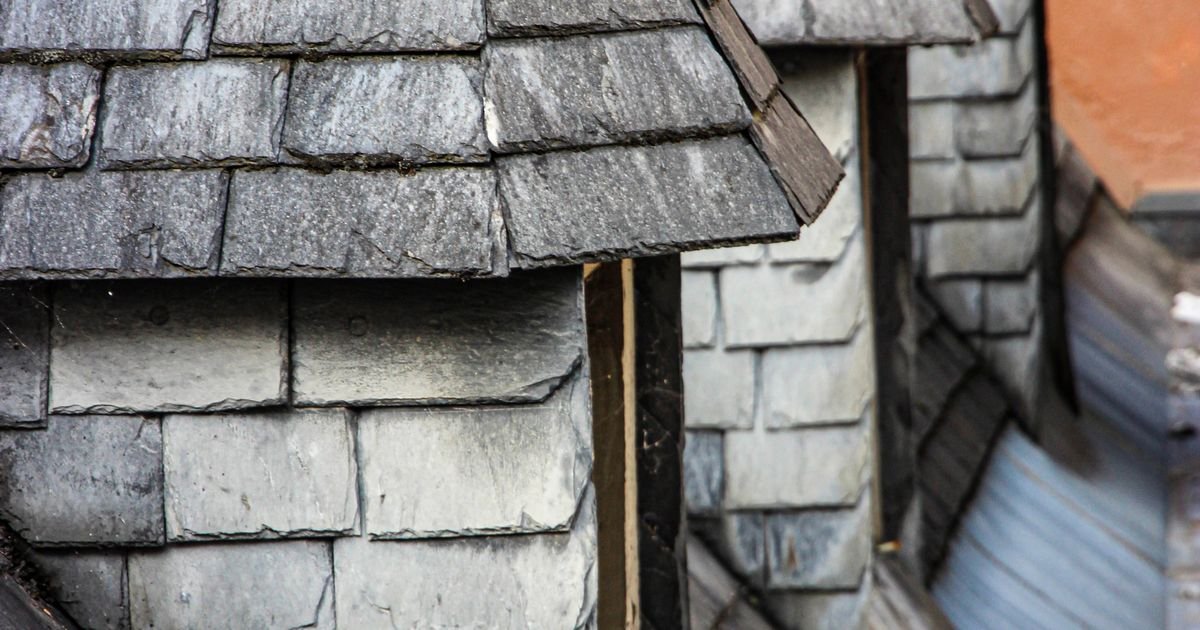
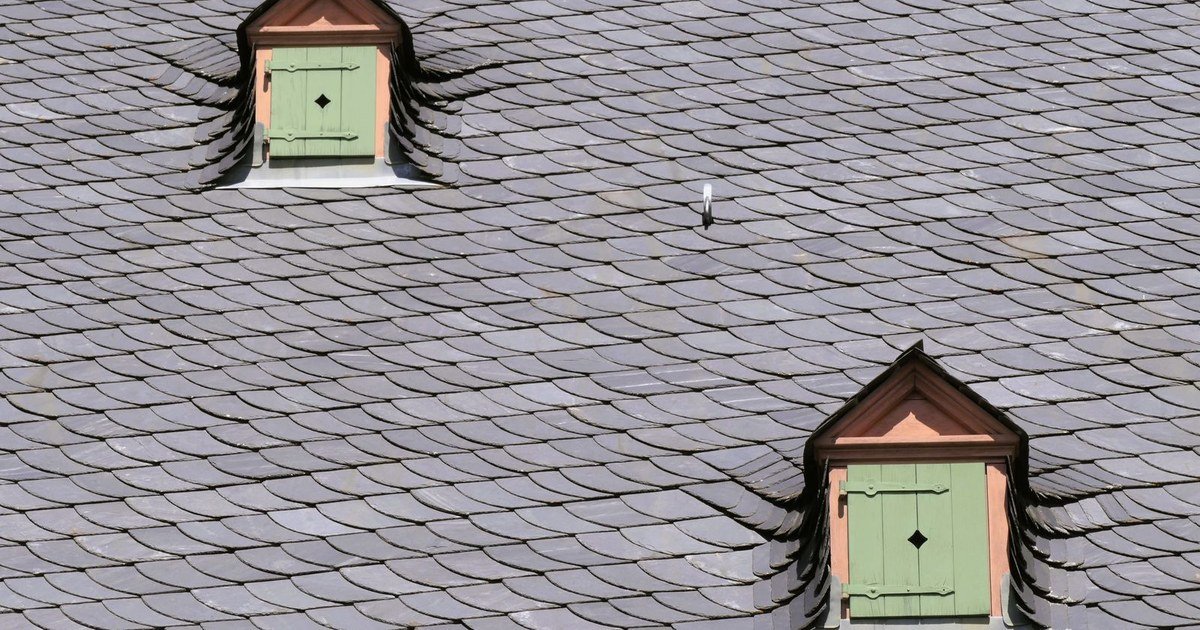
Synthetic slate is the most popular composite style. It mimics the flat, layered look of natural slate in grays, blacks, greens, and purples. Natural slate is heavy and labor intensive to install, and composite slate is far lighter, which is often the deciding factor on homes whose framing was not designed for stone. Installed cost runs $9 to $12 per square foot in most 2026 guides, with some premium lines reaching $16.
Synthetic Shake
Synthetic shake imitates hand split or sawn cedar shakes. It is often chosen to replace a worn cedar roof without the issues that come with wood, such as curling, splitting, rot, and insects, and without the regular treatments cedar needs. Installed cost runs $6 to $18 per square foot depending on brand and profile, the widest range in the category, because shake profiles vary more than slate profiles do.
Synthetic Clay and Barrel Tile
Some manufacturers make composite versions of clay barrel tile, the curved Spanish style. These are less common than slate and shake in most of the United States, but they follow the same idea, which is the look of a heavy material at a fraction of the weight. Installed cost runs $6 to $14 per square foot. Natural clay tile, by comparison, costs $7 to $25 per square foot installed and usually needs structural reinforcement.
Stone Coated Steel Profiles
The steel family comes in tile, shake, and shingle profiles, all with a stone granule finish. These install faster than polymer tiles because the pieces interlock, and they are a strong choice in hail country and high wind zones. They are also the family most likely to be sold by a metal roofing contractor rather than a shingle contractor, so the installer search starts in a different place.
Top Composite Roof Tile Brands in 2026
There is no single recipe for composite roofing, and each manufacturer uses its own blend, which is one reason performance and warranties vary so much from brand to brand. The table below uses material only prices per square, 100 sq ft, from HomeGuide cost data, so installation, underlayment, tear off, and accessories are on top of these figures.
| Brand | Material cost per square | Styles available |
|---|---|---|
| Brava | $700 to $1,150 | Slate, shake, Spanish barrel tile |
| CeDUR | $800 to $1,600 | Shake |
| DaVinci | $400 to $1,200 | Slate, shake |
| EcoStar | $300 to $800 | Slate, shake |
| Enviroslate and Enviroshake | $570 to $1,000 | Slate, shake |
| Inspire | $600 to $1,050 | Slate |
| Quarrix | $430 to $950 | Spanish barrel tile |
DaVinci is the largest name in the category and the one most often specified for synthetic slate and shake. Brava is the premium option, with the widest style range and the highest material prices. EcoStar is the value pick, built on rubber and TPO. CeDUR is a shake only specialist with the highest per square material cost in the table. Quarrix is the main name for composite Spanish barrel tile.
Brand matters more here than it does with asphalt shingles because the formula is the product. Two composite slate tiles can look identical on a sample board and perform very differently in a cold climate or after 20 years in the sun. Ask for the exact product line, not just the brand, and read the warranty for that line before you compare prices. Our guide to Da Vinci shingle problems shows what can go wrong when a composite product is installed or maintained badly, and it is worth reading before you commit to a premium brand.
How Much Do Composite Roof Tiles Cost in 2026
Composite roof tiles cost $6 to $14 per square foot installed in 2026 for the tile style, with slate and shake profiles running higher. The spread across published 2026 cost guides is wide because brands, profiles, roof complexity, and region all move the number, so use the ranges below as planning figures and get itemized quotes for your roof.
Cost by Style
| Style | Installed cost per sq ft | Typical total for a 2,000 sq ft roof |
|---|---|---|
| Synthetic clay and barrel tile | $6 to $14 | $12,000 to $28,000 |
| Synthetic slate | $9 to $12, premium lines to $16 | $18,000 to $32,000 |
| Synthetic shake | $6 to $18 | $12,000 to $36,000 |
| Stone coated steel tile | $7 to $14 | $14,000 to $28,000 |
RoofingCalc puts the average 80 percent range for most homes at $9.50 to $12.50 per square foot installed, with a low end near $7.50 and a high end near $14.50. Modernize reports a lower range of $4 to $8 per square foot, or $8,000 to $16,000 for a 2,000 sq ft roof, with most homeowners spending around $13,500. The gap between the two sources is mostly about which brands and profiles are included, so treat $9 to $12 per square foot as the realistic middle for a mid range synthetic slate roof and budget higher for premium brands and complex roofs.
For a sense of scale, the same 2,000 sq ft roof in architectural asphalt shingles costs roughly $8,000 to $12,000 installed, natural slate costs $20,000 to $60,000, and natural clay tile costs $14,000 to $50,000. Composite sits between asphalt and the natural materials it imitates, which is the whole point of the product.
What Moves the Price
Labor makes up roughly 50 percent of the total cost, which is a bigger share than it is for asphalt shingles because composite tiles go on one piece at a time. The factors that move the price most are:
- Product line and profile. Thicker, more detailed tiles and premium finishes cost more, and shake profiles vary more than slate profiles.
- Roof complexity. Valleys, dormers, chimneys, and steep pitches add labor and flashing work.
- Tear off and deck repairs. Removing the old roof adds $1 to $3 per square foot, and damaged decking adds $2 to $5 per square foot to replace.
- Underlayment requirements. Some slopes and fire ratings require a full deck membrane, and underlayment materials run $0.10 to $0.80 per square foot.
- Accessories. Matching hip, ridge, and starter pieces are usually product specific and priced separately.
- Fire rating. Composite roofing with a Class A fire rating costs more than Class C material but offers the maximum fire resistance.
- Permits. Roof replacement permits cost $100 to $500 depending on location.
Get at least three itemized quotes, and make sure each one names the exact product line, the underlayment, and the accessories. For a wider view of what roof work costs, see our guide to average roof replacement cost.
How Composite Roof Tiles Are Installed
Composite tiles are nailed or screwed to a solid roof deck over underlayment, one piece at a time, with overlapping courses like slate or shakes. The details are set by each manufacturer, and following the installation guide is what keeps the product warranty valid, so a crew that improvises is a crew that can void your coverage.
The sequence on a typical job looks like this. First the old roof comes off and the deck is inspected and repaired. Then underlayment goes down, with a self adhered membrane at the eaves in cold climates and over the full deck on low slope sections. Starter tiles go on at the eaves, spaced to allow for expansion. Field tiles go on course by course from the eave to the ridge, each tile fastened with at least two nails, more in high wind areas or where code requires it. Flashing goes in at valleys, walls, and chimneys as the courses reach them. Hip and ridge pieces finish the roof, and those pieces are usually product specific, so they are ordered with the tiles rather than improvised on site.
Three installation rules catch out inexperienced crews. First, minimum slope. Many polymer products cannot go on roofs flatter than 3:12, and roofs between 3:12 and 4:12 need a self adhered membrane over the entire deck. Second, expansion gaps. Polymer tiles expand and contract with temperature, so they must not be butted tightly, and starter tiles in one major manufacturer guide are spaced 3/8 to 1/2 inch apart. Third, cold weather handling. Some products can be installed in temperatures as low as 20°F, compared with the 40°F to 45°F minimum many other roofing products list, but tiles warped in storage should be allowed to acclimate and flatten before they go on.
Because tiles go on individually, installation generally takes longer than a standard asphalt shingle roof. A 2,000 sq ft composite roof often takes three to five days against one to two days for asphalt, and flashing details at valleys, walls, and chimneys matter more on a premium roof. Ask any contractor how many roofs they have installed in your exact product line in the past year, and ask for addresses you can drive past. The National Roofing Contractors Association is a good place to start vetting any roofer’s credentials before you hire.
How Composite Roof Tiles Perform
Performance is where composite earns its premium price, and also where the differences between brands show up most clearly. Confirm every rating below for the exact product you are buying, because ratings vary by brand, profile, and even by the underlayment used underneath.
Hail Resistance
Many composite slate and shake products carry a Class 4 impact rating, the highest class under the UL 2218 test. DaVinci, Brava, and EcoStar all list Class 4 ratings for their composite lines. In the UL 2218 test, a 2 inch steel ball is dropped from 20 feet onto multiple spots on a test roof, and to earn Class 4 the product can show cosmetic dents but no cracks through to the back surface.
Keep the rating in perspective. Class 4 is a lab benchmark, not a promise that a roof cannot be damaged by hail. Real hail varies in size, density, and angle, and older roofs may not perform like new test samples. Some homeowners may qualify for insurance savings with an impact rated roof, so ask your insurer what it offers and what documentation it needs before you choose a product. If your current roof has already taken a beating, start with a roof leak repair assessment before you plan a replacement.
Fire Ratings
Fire ratings depend on the product and the system underneath it. Brava lists its tiles at Class A or Class C depending on the product, and some manufacturer guides show that the fire class depends on which underlayment is used. Class A is the highest fire rating, so if it matters to you, or to your insurer or local code, confirm the full assembly that achieves it, not just the tile rating on its own.
Wind Ratings
Wind ratings also vary by brand and fastening method. Most composite lines are rated to 110 mph, and some premium lines report wind resistance tested up to 180 mph. Manufacturers publish wind ratings tied to specific nail types and fastener counts, so the installation method has to match the rating you are relying on. A tile rated to 130 mph and nailed with the wrong fastener is not a 130 mph roof.
Cold Climate Performance
Cold weather performance is a fair question for any plastic based product. Leading products are designed for cold climates, and DaVinci says its composite slate and shake can usually be installed in temperatures as low as 20°F. The risks are brittleness and movement. Some plastic shingles become brittle in freezing climates, and temperature swings make polymer tiles grow and shrink, which is why the required spacing between tiles exists. Skipping the spacing can cause buckling in summer or gaps in winter, and that is an installation quality issue more than a material flaw.
Ice dams are a separate problem that no roof covering prevents on its own, because they are caused by attic heat loss. The ice barrier membrane at the eaves matters on composite roofs just as it does on asphalt, and attic ventilation and insulation are the real fix. Our guide to roof underlayment explains the membrane layers that protect the deck underneath any covering.
How Long Do Composite Roof Tiles Last
Composite roofs last 40 to 50 years with correct installation and proper maintenance, according to HomeGuide and most manufacturer guidance. That is roughly double the real world life of a standard asphalt shingle roof, and it is the main reason the higher upfront cost can make sense for a homeowner who plans to stay in the house.
Manufacturers back many composite products with long limited warranties, for example a 50 year limited warranty from Brava, a lifetime limited material warranty from DaVinci, or a 50 year warranty that EcoStar lists as available. A warranty term is not the same as a measured lifespan, and independent long term field data is still limited compared with slate or asphalt, because the current generation of polymer products has only been on roofs for a few decades.
When comparing warranties, read the fine print. Check what is covered, whether coverage decreases over time, whether it transfers to a new owner if you sell, what installation requirements apply, and whether the wind and hail coverage has separate limits. Workmanship coverage, which addresses installation errors, comes from the installer rather than the manufacturer, so ask about it separately. Our guide to types of roofing warranties explains what to look for in the fine print before you sign.
Pros and Cons of Composite Roof Tiles
| Pros | Cons |
|---|---|
| Slate or cedar look without the weight, so no structural reinforcement is usually needed | More expensive than asphalt shingles, roughly two to three times the installed cost |
| Class 4 impact rated on many lines, the highest impact resistance available | Vulnerable to cracking in cold climates on lower grade plastics |
| No rot, splitting, or insect damage, a key advantage over wood shakes | Not a perfect replica of natural materials up close, and some lines have a shiny finish |
| Low maintenance, no sealing, staining, or treatments | Fewer experienced installers, and product specific installation rules |
| Wind resistant up to 110 mph on most lines, higher on premium lines | May fade or discolor over time in direct sunlight |
| Moisture and algae resistant | Slippery when wet, which matters for future maintenance access |
| Many styles and colors available | Matching repairs later can be hard if a line or color is discontinued |
| Eco friendly when made from recycled plastic, and some lines are recyclable | Shorter real world history than natural slate, which has centuries of field data |
The honest summary is that composite roof tiles are durable, fire and impact resistant, and come in a variety of styles and colors, but they are a premium product with real trade offs. They are less expensive and require less maintenance than natural slate or tile, but they typically do not last as long as the real thing, and the quality gap between brands is wider than it is for asphalt shingles.
Composite vs Natural Slate vs Clay Tile vs Asphalt
| Material | Installed cost per sq ft | Lifespan | Weight per square | Maintenance |
|---|---|---|---|---|
| Composite roof tiles | $6 to $14 | 40 to 50 years | 175 to 400 lb | Very low |
| Natural slate | $15 to $30 | 75 to 150 years | 700 to 1,000 lb | High, specialist repairs |
| Clay and concrete tile | $7 to $25 | 50 to 100 years | 600 to 1,100 lb | Moderate |
| Architectural asphalt shingles | $4 to $6 | 20 to 30 years | 200 to 350 lb | Low |
| Cedar shake | $25 to $30 | 30 to 40 years | 300 to 400 lb | High, treatments needed |
The table shows the real trade off. Natural slate lasts longest by a wide margin, but it costs two to three times as much installed and usually needs structural reinforcement. Clay tile is durable but heavy and fragile underfoot. Asphalt is cheap and easy but short lived. Composite is the middle ground, and for most homeowners who want the premium look, it is the practical middle ground rather than a compromise.
One comparison worth making on its own is composite slate against natural slate. Synthetic slate costs $9 to $16 per square foot installed against $15 to $30 for natural slate, weighs roughly a quarter as much, and installs with standard roofing tools. Natural slate wins on lifespan and authenticity, and it wins outright on homes where the framing was built for stone. For everyone else, the synthetic version delivers most of the look for about half the money.
Maintenance Tips for Composite Roof Tiles
Composite roofs need less maintenance than the materials they imitate, but low maintenance is not no maintenance. A simple routine keeps the roof at the top of its lifespan range.
Inspect the roof from the ground every spring and after any major storm, looking for cracked, slipped, or missing tiles and for flashing that has lifted at valleys and chimneys. Keep gutters clear, because standing water at the eaves ages any roof faster, and keep tree branches from rubbing the tiles. Wash off algae and debris with a low pressure rinse rather than a pressure washer, which can drive water under the tiles and damage the surface. Never walk on a composite tile roof unless you know the product allows it, because some profiles crack underfoot and most are slippery when wet.
Repairs are usually simple, since individual tiles can be replaced without disturbing the surrounding courses, but matching matters. Order a few spare tiles at installation time and store them, because a color or profile that is discontinued later can turn a small repair into a visible patch. If a leak appears, get a roof repair inspection promptly rather than waiting, because water that gets under a tile roof can travel a long way before it shows inside.
Is a Composite Roof Tile Roof Right for Your Home
Composite roofing tends to make the most sense when you want a slate or cedar look but your framing, budget, or maintenance tolerance rules out the real thing, when you are replacing a worn cedar or slate roof and want to keep the home’s character, when hail resistance is a priority and the product you choose carries a Class 4 rating, and when you plan to stay in the home long enough to benefit from a roof that lasts 40 to 50 years.
It may not be the best fit when budget is the top priority, when the roof is too low slope for the product, or when no experienced installer is available for the brand you want. A quality architectural asphalt shingle, including impact rated versions, is often the practical alternative in those cases. Homes in historic districts should also check local rules first, because some districts require the real material rather than a synthetic copy, and a composite roof that an HOA or a historic board rejects is an expensive mistake.
How to Choose a Brand and a Contractor
The product and the installer matter equally with composite roofing, and the quote is where both are decided. Before you sign, ask every contractor these questions and compare the answers side by side.
- How many roofs have you installed in this exact product line in the past year, and can I see two of them?
- Does the quote name the exact product line, the underlayment, and the hip, ridge, and starter accessories?
- What is the minimum slope for this product, and does my roof meet it?
- What fire rating does the full assembly achieve, tile plus underlayment?
- What is the wind rating, and which fastener count does it depend on?
- What does the manufacturer warranty cover, does it transfer if I sell, and what is the workmanship warranty?
- Does the estimate include tear off, deck repairs, permits, and disposal?
- How long will the job take, and what happens if bad weather hits mid job?
Avoid the cheapest quote if it cannot answer these questions. A composite roof installed by a crew that has never worked with the product is the most common way a premium roof becomes a problem roof, and the warranty will not save you if the installation guide was not followed. If storm damage is forcing the decision, an emergency roof repair can protect the house while you take the time to choose properly.
Frequently Asked Questions
What are composite roof tiles made of? They are made from a blend of engineered materials, usually virgin plastic resins, recycled plastics, or rubber blends with UV stabilizers and fire retardants, molded to look like slate, cedar shake, or clay tile. A second family, stone coated steel, is a steel tile coated in aluzinc, primer, and stone granules.
How much do composite roof tiles cost in 2026? Composite roof tiles cost $6 to $14 per square foot installed for the tile style, with synthetic slate at $9 to $12 and synthetic shake at $6 to $18. A typical 2,000 sq ft roof costs $12,000 to $32,000 depending on style, brand, and roof complexity. All figures vary by region and contractor.
How long do composite roof tiles last? Most composite roofs last 40 to 50 years with correct installation and proper maintenance. Manufacturers back them with 50 year or lifetime limited material warranties, though a warranty term is not the same as a measured lifespan.
Are composite roof tiles hail resistant? Many composite slate and shake products carry a Class 4 impact rating, the highest class under the UL 2218 test. That is a lab benchmark rather than a promise of no damage, so confirm the rating for the specific product you are buying.
Are composite roof tiles the same as asphalt shingles? No. Composition shingles are asphalt shingles. Composite roof tiles are synthetic slate, shake, or tile made from plastic resins, rubber, or steel, and they are different materials with different looks, costs, and installation methods.
Can composite roof tiles be installed over old shingles? Many composite products can be installed over a single layer of asphalt shingles in fair to good condition, but most manufacturers and local codes prefer a full tear off for a premium roof, because the deck needs inspection and the underlayment needs to be right. Ask your contractor what the product guide requires.
Do composite roof tiles need structural reinforcement? Usually not. Composite tiles weigh 175 to 400 lb per square, about the same as asphalt shingles and far less than natural slate at 700 to 1,000 lb per square, so most homes built for asphalt can carry composite without reinforcement.
What is the best composite roof tile brand? There is no single best brand, because formulas differ. DaVinci is the largest name for slate and shake, Brava is the premium option with the widest style range, EcoStar is the value pick, and Quarrix leads on composite barrel tile. Choose by the style you want, the ratings for that exact product, and the installer experience available in your area.
Want the slate or shake look without the weight or the upkeep of the real thing? Compare itemized quotes for the exact product line, not just the brand, and check the installer has fitted that line before. For a full view of what a new roof costs, see our guide to average roof replacement cost, and for the roof underneath the tiles, see our guide to roof underlayment.