
A slate roof lasts 75 to 150 years when it is made from good quality stone and installed well. Some premium hard slate roofs have lasted more than 200 years, and the United States National Park Service puts the range for properly installed slate at 60 to 125 years or longer, depending on the type of slate, the roof design, and the local climate. No other common roofing material comes close. Asphalt shingles last 15 to 30 years, and even a good metal roof usually lasts 40 to 70 years, so one slate roof can outlast four or five asphalt roofs.
That headline number hides a wide spread. Soft slate from a poor quarry can fail in 50 years. A slate roof with worn flashing or cheap nails can leak long before the stone itself wears out. And a synthetic slate roof, which only looks like stone, lasts 30 to 50 years, a fraction of the real thing. So the honest answer to how long a slate roof lasts is that the stone can last a century or more, but only if the grade, the installation, and the parts underneath it are right. This guide explains the lifespan by slate type, the factors that decide where your roof lands in the range, what actually fails first, what a slate roof costs per year of service, and how to tell when yours is nearing the end.
How Long Does a Slate Roof Last by Type
Not all slate is the same stone. The quarry, the mineral content, and the grade decide whether a roof lasts 50 years or 200 years, so a single number never tells the full story.
| Roof material | Typical lifespan |
|---|---|
| Hard natural slate | 75 to 200 years |
| Soft natural slate | 50 to 125 years |
| Synthetic slate | 30 to 50 years |
| Clay tile | 50 to 100 years |
| Metal roofing | 40 to 70 years |
| Architectural asphalt shingles | 25 to 30 years |
| 3 tab asphalt shingles | 15 to 20 years |
Hard slate comes from deeper quarry layers. It is denser, less porous, and absorbs very little water, which is why it reaches the top of the range and sometimes passes 200 years. Soft slate is still far more durable than asphalt, but its higher porosity and mineral content make it more vulnerable to freeze thaw cycles and chemical weathering, so it usually lands between 50 and 125 years. The National Slate Association gives an expected service life of at least 75 years for suitable S1 grade slate, and many proven slate products last 100 to 175 years or more.
For context on other materials, our guide to how long does a metal roof last covers the next longest lived common roofing material in the same detail.
What Slate Roofing Is
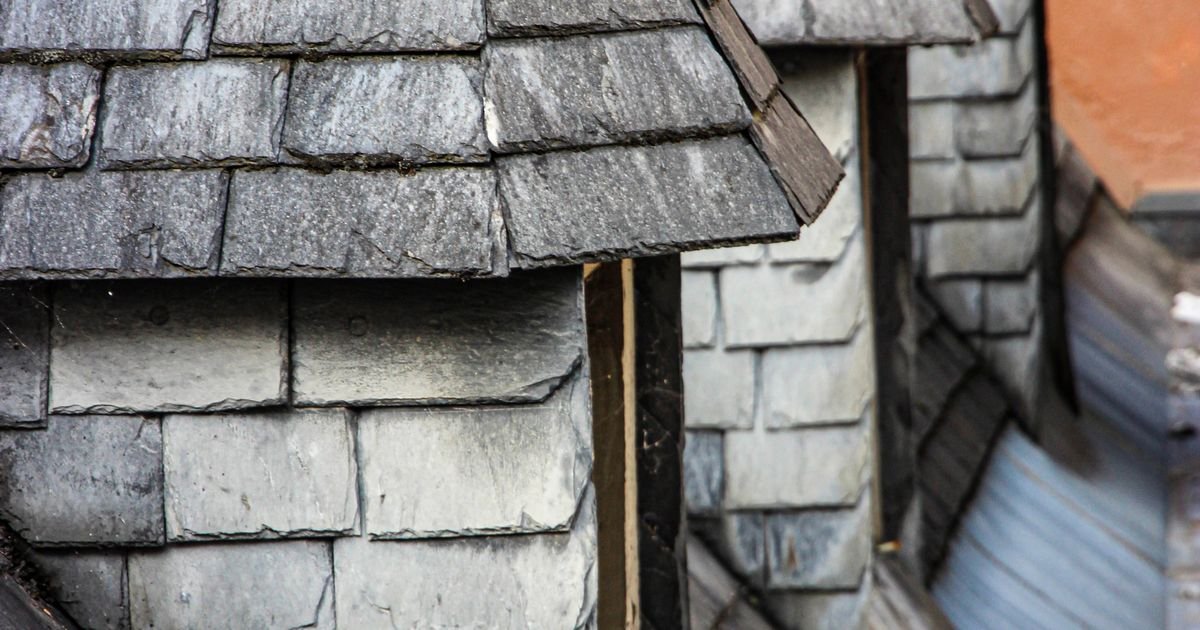
Slate is a fine grained metamorphic rock formed over millions of years from compressed shale type sedimentary rock. Quarries split large blocks of it along thin natural layers into flat tiles, which are then nailed to the roof in overlapping courses. Each tile is unique in texture and color, with natural shades of gray, black, green, purple, and red decided by trace minerals in the stone.
Slate has been used on roofs for centuries, on historic homes, churches, schools, and government buildings, because it is naturally fireproof, resistant to insects, mold, and fungus, and almost waterproof. It earns a Class A fire rating as a naturally non combustible material, it will not ignite from airborne sparks, and its dense structure resists ultraviolet radiation without fading or drying out the way petroleum based products do. That combination is why slate is still called the gold standard of roofing, even though it is one of the most expensive materials to buy and install.
Hard Slate vs Soft Slate: the Grade Decides the Lifespan
The single biggest factor in slate roof lifespan is the grade of the stone, and most buyers never ask about it. Slate is broadly split into hard slate and soft slate, and the difference is not cosmetic.
Hard slate is dense and low in porosity. Water barely penetrates it, so freeze thaw cycles have little to work on, and its stable silica based minerals resist acid rain. Soft slate absorbs more water and contains more reactive minerals, so it weathers faster, especially in wet or polluted climates. A hard slate roof can outlast five cycles of asphalt shingle replacement. A soft slate roof still beats asphalt by decades, but it will not reach the 150 year stories.
Two tests separate good slate from risky slate. The first is calcium carbonate content. Slate with high calcium carbonate reacts with acid rain, slowly turning white, flaking at the edges, and letting in more water. Slate with less than 5 percent apparent calcium carbonate is often linked with the best durability ratings, while 20 percent is an important dividing line between roofing slate and carbonate slate. The second is water absorption. Low absorption means fewer freeze thaw cracks and slower weathering. The European standard BS EN 12326 tests slate for water absorption, bending strength, carbonate content, sulfur dioxide resistance, and oxidation risk, and it rates products S1, W1, and T1 for the best performance in each category. American buyers should ask for the test report for the exact product, quarry, and grade, not just a brand name, because layers within one quarry can vary.
Quarry origin is useful but not decisive. Welsh and Scotch slate have long histories and many old roofs lasting 100 to 150 years. Spanish slate is common in export with broad sizes. Chinese slate varies widely by quarry and layer, so it should be judged on its test report, not its country of origin. Good slate from any country can be durable, and poor slate from any country can cause problems.
What Decides How Long a Slate Roof Lasts
Beyond the stone itself, six factors decide where a slate roof lands in its lifespan range.
1. Quality of the slate
This is the grade question above. High grade slate from a proven quarry, with low calcium carbonate and low water absorption, can last over 100 years with proper care. Lower grade slate may crack, flake, or fade decades sooner. Ask for the BS EN 12326 report and the S1, W1, and T1 ratings before you buy, and keep the quarry name and product grade on your paperwork.
2. Installation quality
Even the best slate fails early if it is installed badly. Slate tiles are brittle, heavy, and unforgiving. Each tile is nailed individually through pre drilled holes with copper or stainless steel nails, laid with a precise overlap so water sheds correctly. Incorrect overlap, wrong nail placement, or bad flashing lets water in and shortens the roof's life by decades. Slate installation is a specialist trade, not a general roofing job, so hire a contractor with a proven record of slate work and check past slate projects before you sign. If you are comparing installers, our residential roofing services page explains what a full professional roof installation should include.
3. Climate and weather
Slate handles heat, rain, snow, and wind better than almost any material, but freeze thaw cycles are its real enemy. Water that soaks into porous slate and then freezes expands and cracks the tile from inside. Roofs in cold, wet climates with many freeze thaw cycles wear faster than the same slate in a mild, dry climate. Acid rain in polluted areas also attacks high carbonate slate over many years. Hail and falling branches can crack individual tiles, though slate resists impact better than asphalt.
4. Roof slope and design
Slate performs best on steep roofs, where rain and snow slide off quickly and moisture does not sit on the tiles. Slate shingles installed on steeper slopes tend to last longer than those on low slopes. On flat or low slope roofs, water can accumulate and work into the stone and the layers below. Good drainage design, clean gutters, and well detailed valleys matter as much as the slope itself.
5. Flashing, fasteners, and underlayment
The stone is rarely the first thing to fail. Flashing around chimneys, valleys, and ridges, the nails holding each tile, and the underlayment beneath the slate all age faster than the slate itself. A roof with 100 year slate and 30 year flashing will leak at year 35 unless the flashing is replaced. Roofers should use nails with a lifespan that matches the slate, which is why copper or stainless steel fasteners are standard on slate work. See the next section for the full picture.
6. Maintenance and care
Regular inspection is the cheapest way to add decades to a slate roof. Annual inspections catch cracked or slipped tiles, damaged flashing, and moss buildup before they become leaks. Cleaning debris off the roof, keeping gutters clear, and replacing broken tiles promptly all protect the stone. Moss and algae trap moisture against the slate, so remove them with a soft brush and a non abrasive cleaner, never a pressure washer, which can damage tiles and loosen fasteners.
The Slate Outlasts the System: What Actually Fails First
This is the part most slate lifespan guides skip, and it matters more than the stone's rating. A slate roof is a system, and the stone is only one layer. The underlayment beneath the slate, the flashing at every joint, and the nails holding each tile all have shorter lives than the slate itself.
Standard felt underlayment lasts 20 to 30 years. High quality synthetic underlayment lasts longer, but still far less than a century. Flashing lasts 30 to 40 years in most cases, depending on the metal and the exposure. Even copper flashing, the best choice for slate, eventually needs attention. Nails corrode, especially if a cheaper metal was used, and a corroded nail lets a sound tile slip out of place.
That means a 100 year slate roof usually needs one or two rounds of system work during its life: new underlayment and flashing, replacement of corroded fasteners, and re laying of the original tiles. Sound slate tiles can be reclaimed and reused during this work, which is one reason slate is so economical over a century. Budget for this reality when you buy. A slate roof that is never serviced will leak at the flashing long before the stone gives up, and the owner will blame the slate for a failure that belonged to the metal and felt beneath it. For the full picture of what sits under the surface, see our guide to roof underlayment.
Natural Slate vs Synthetic Slate
Synthetic slate, also called composite slate, is made from rubber, polymers, or mineral composites and shaped to look like real stone. It is lighter, cheaper, and easier to install, and it is a genuine option for homes whose structure cannot carry the weight of real slate. Our pillar guide to composite roof tiles covers the synthetic slate family, including brands, costs, and warranties, in full.
The lifespan gap is large. Natural slate lasts 75 to 150 years or more. Synthetic slate typically lasts 30 to 50 years, with some high end products approaching 75 years. Synthetic slate weighs far less, so it rarely needs structural reinforcement, and installation is faster because the tiles are uniform and easy to cut. But synthetic slate can fade, warp, or become brittle with age in ways natural stone does not, and its long term track record is measured in decades, not centuries.
| Feature | Natural slate | Synthetic slate |
|---|---|---|
| Lifespan | 75 to 150 years or more | 30 to 50 years |
| Weight | 800 to 1500 pounds per square | Much lighter, usually no reinforcement needed |
| Installed cost | $20 to $35 per square foot | $9 to $16 per square foot |
| Fire rating | Class A, naturally non combustible | Varies by product |
| Maintenance | Low, occasional tile replacement | Low, but watch for fading and warping |
| Best for | Forever homes, historic homes, heritage look | Budget limits, light structures, slate look |
The National Park Service advises that historic slate roofs should be repaired rather than replaced whenever possible, and that synthetic slate is a compromise, not an equal substitute, for a historic building. Its preservation guidance on slate repair and replacement is the most authoritative free source on the subject, and it is worth reading before you decide between real and synthetic slate.
How Much a Slate Roof Costs
Slate is the most expensive common roofing material to install, and the price reflects the stone, the weight, and the specialist labor. Natural slate costs $10 to $20 per square foot for materials and $10 to $15 per square foot for installation, for a total installed cost of $20 to $35 per square foot in most 2026 guides. Another common figure is $800 to $1,500 per square, or $8 to $15 per square foot, which usually reflects simpler roofs or lower cost regions, so get quotes for your own roof rather than trusting any single number. A typical 2,000 square foot roof can run $40,000 to $70,000 or more installed, and complex roofs with many valleys, dormers, and chimneys cost more.
What changes the price is the size of the roof, the grade and origin of the slate, the pitch, the complexity of the design, the structural reinforcement needed, and the availability of experienced slate installers in your area. Shipping heavy stone adds cost too, especially far from the quarry.
The honest way to judge the price is cost per year of service, not cost on day one.
| Material | Installed cost per square foot | Lifespan | Cost per year per square foot |
|---|---|---|---|
| 3 tab asphalt shingles | $4 to $6 | 15 to 20 years | About $0.25 to $0.40 |
| Architectural asphalt shingles | $5 to $9 | 25 to 30 years | About $0.20 to $0.36 |
| Metal roofing | $8 to $18 | 40 to 70 years | About $0.15 to $0.35 |
| Synthetic slate | $9 to $16 | 30 to 50 years | About $0.22 to $0.40 |
| Natural slate | $20 to $35 | 75 to 150 years | About $0.18 to $0.35 |
On a per year basis, natural slate costs about the same as architectural shingles, and often less than synthetic slate, because the cost is spread over a century instead of a single generation. The catch is the upfront bill, which is three to five times higher than asphalt. If you plan to stay in the home for decades or pass it on, slate is the cheapest roof you will ever buy. If you plan to sell in ten years, you will not recover the premium, though buyers do pay more for a home with a slate roof already in place. For the installed pricing context on the budget end, see our guide to average roof replacement cost.
Signs Your Slate Roof Is Nearing the End of Its Life
Slate does not fail all at once. It gives warning signs, usually at the system level first, and catching them early is the difference between a repair and a replacement.
- Slipped or missing tiles. One or two slipped tiles is normal wear and a simple repair. Dozens of slipped tiles across a slope suggest the nails are corroding or the tiles are thinning.
- Cracked, flaking, or powdery tiles. Slate that flakes at the edges, turns white, or feels soft and powdery is weathering from within, usually from high carbonate content or years of freeze thaw damage.
- Leaks that return after repair. A leak that keeps coming back in the same area usually means the flashing or underlayment beneath the slate has failed, even if the tiles above look fine. Our roof leak repair services cover how a persistent leak is traced to its real source.
- Stains or damp patches in the attic. Water marks on the underside of the decking or on rafters show that water is getting past the slate layer, and they often appear long before a stain shows on a ceiling.
- Sagging or soft decking. A soft spot underfoot in the attic or a visible sag in the roofline means moisture has damaged the structure, and the roof needs a professional inspection right away.
- Granule like debris in the gutters. Slate does not shed granules like asphalt, but crumbling slate leaves gritty fragments in gutters and at downspout outlets, a sign the stone is breaking down.
- Widespread moss and lichen. Heavy moss holds moisture against the stone and speeds weathering. A little moss is cosmetic. A roof covered in it is a roof that needs cleaning and inspection.
A single cracked tile is a repair. Widespread flaking, powdering, or delamination across a whole slope is the stone itself reaching the end of its life, and at that point replacement, not repair, is the honest answer.
Repair or Replace a Slate Roof
Most slate roofs should be repaired, not replaced. Individual tiles can be replaced one at a time with matching stone, slipped tiles can be rehung with copper hooks, and flashing can be renewed without touching the field of the roof. A slate specialist can often extend a roof's life by decades with targeted work, and the National Park Service guidance says historic slate roofs should be repaired rather than replaced whenever possible.
Replacement makes sense in three situations. First, when the stone itself is failing across a whole slope, with widespread flaking, powdering, or splitting. Second, when the roof structure underneath is damaged and the tiles have to come off anyway. Third, when matching replacement tiles are no longer available and the roof has become a patchwork of mismatched stone.
If replacement is needed, keep the sound tiles. Good slate is routinely salvaged, cleaned, and reused on the new roof or sold, which cuts the material cost and keeps a century old material in service. And if the structure cannot carry real slate again, synthetic slate is the usual fallback, at a lower cost and a shorter life. For a side by side look at the other premium long life option, see our guide to standing seam metal roofing, which lasts 40 to 70 years at a lower installed cost than slate.
How to Make a Slate Roof Last as Long as Possible
- Inspect it every year. Walk the ground with binoculars, check the attic after heavy rain, and have a slate specialist inspect the roof every few years and after any major storm.
- Fix small problems fast. A slipped tile left for a season lets water into the underlayment. Replace broken tiles promptly with matching stone, and keep spare tiles from the original batch for repairs.
- Keep gutters and valleys clear. Standing water and debris trap moisture against the slate and the flashing. Clean gutters at least twice a year.
- Control moss and algae. Remove growth with a soft brush and a non abrasive cleaner. Consider copper or zinc strips near the ridge to slow regrowth.
- Never walk on a slate roof. Slate tiles crack underfoot, even when they look solid. Inspections and repairs should be done from ladders, scaffolding, or the ground, by trained professionals.
- Never pressure wash it. High pressure water damages tiles and loosens fasteners. Use a soft broom and low pressure water only.
- Use the right fasteners. When tiles are replaced, insist on copper or stainless steel nails and hooks with a lifespan that matches the slate.
- Check the flashing first. At every inspection, look at the flashing around chimneys, valleys, and skylights before you look at the tiles. Flashing fails first, and catching it early saves the decking below.
Is a Slate Roof Worth It
A slate roof is worth it if you plan to stay in your home for decades, if you value a natural material that needs no manufacturing and can be recycled, and if your home can carry the weight. It is the longest lasting roofing material you can buy, it is fireproof, it adds real resale value, and on a cost per year basis it is no more expensive than architectural shingles.
It is not worth it if you are on a tight budget, if you plan to sell within ten years, if your structure cannot support 800 to 1500 pounds per square without expensive reinforcement, or if you need regular roof access for solar panels or maintenance, since every footstep risks cracking a tile. In those cases, synthetic slate or a standing seam metal roof gives you much of the look and longevity at a lower price. Our metal roofing services page covers the premium metal options if slate proves too heavy or too costly for your home.
Frequently Asked Questions
How long does a slate roof last?
A well installed natural slate roof lasts 75 to 150 years. Hard slate from a good quarry can pass 200 years, while soft slate usually lasts 50 to 125 years. Synthetic slate lasts 30 to 50 years.
How long does a slate roof last compared to asphalt shingles?
Slate lasts three to five times longer. Architectural asphalt shingles last 25 to 30 years and 3 tab shingles last 15 to 20 years, so one slate roof can outlast four or five asphalt roofs.
What is the lifespan of a slate roof on a historic home?
Many historic slate roofs are still in service after 100 to 150 years, and some have lasted over 200 years. The National Park Service records properly installed slate lasting 60 to 125 years or longer, and preservation guidance recommends repairing historic slate rather than replacing it.
Can a slate roof last 200 years?
Yes, in the right conditions. Hard slate with low water absorption and low calcium carbonate, installed well on a steep roof in a mild climate, has lasted more than 200 years on historic buildings. It is the exception, not the average, and it depends on the grade of the stone.
How do I know if my slate roof needs replacing?
Widespread flaking, powdering, or splitting across a whole slope, dozens of slipped tiles, and leaks that return after repair are the main signs. A single cracked tile is a repair, not a replacement. A slate specialist should make the call after an inspection.
Does a slate roof need a lot of maintenance?
No. Slate is one of the lowest maintenance roofing materials. Annual inspections, clean gutters, prompt replacement of broken tiles, and moss control are usually all it needs. The flashing and underlayment need attention more often than the stone.
Can you walk on a slate roof?
No, you should never walk on a slate roof. The tiles are brittle and crack underfoot, even when they look solid. Professionals use ladders and scaffolding, and inspections should be done from the ground or the attic where possible.
Is synthetic slate as good as natural slate?
Synthetic slate looks similar and costs less, but it is not as good for longevity. It lasts 30 to 50 years against 75 to 150 years or more for natural slate, and it can fade or warp with age. It is the right choice when the structure cannot carry real slate or the budget does not stretch to it.