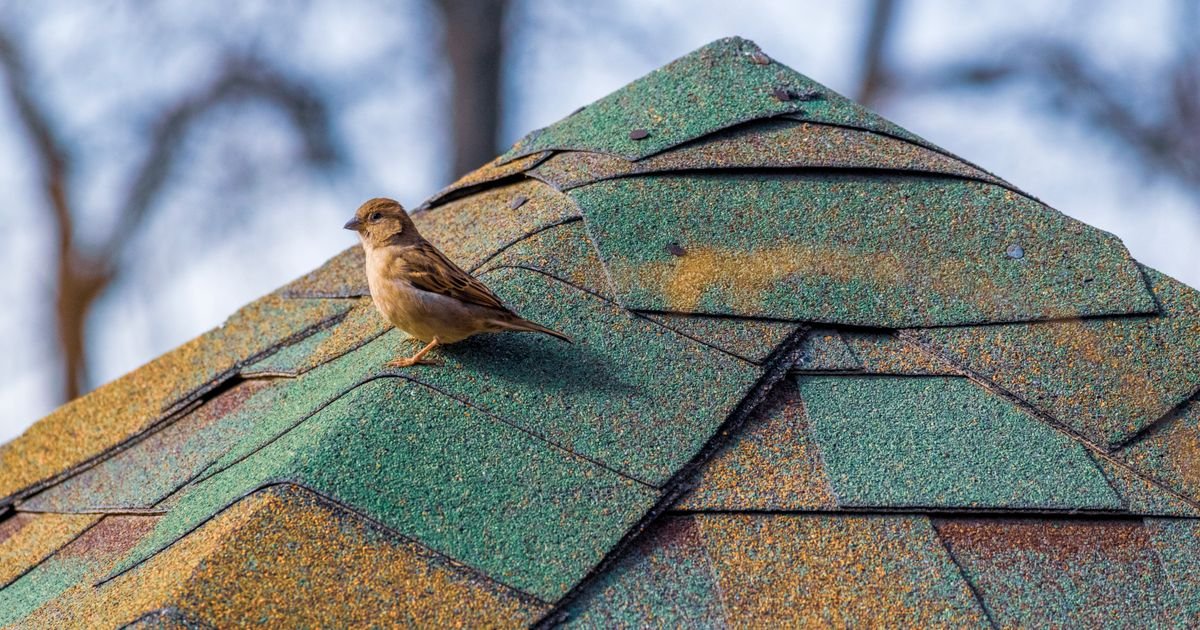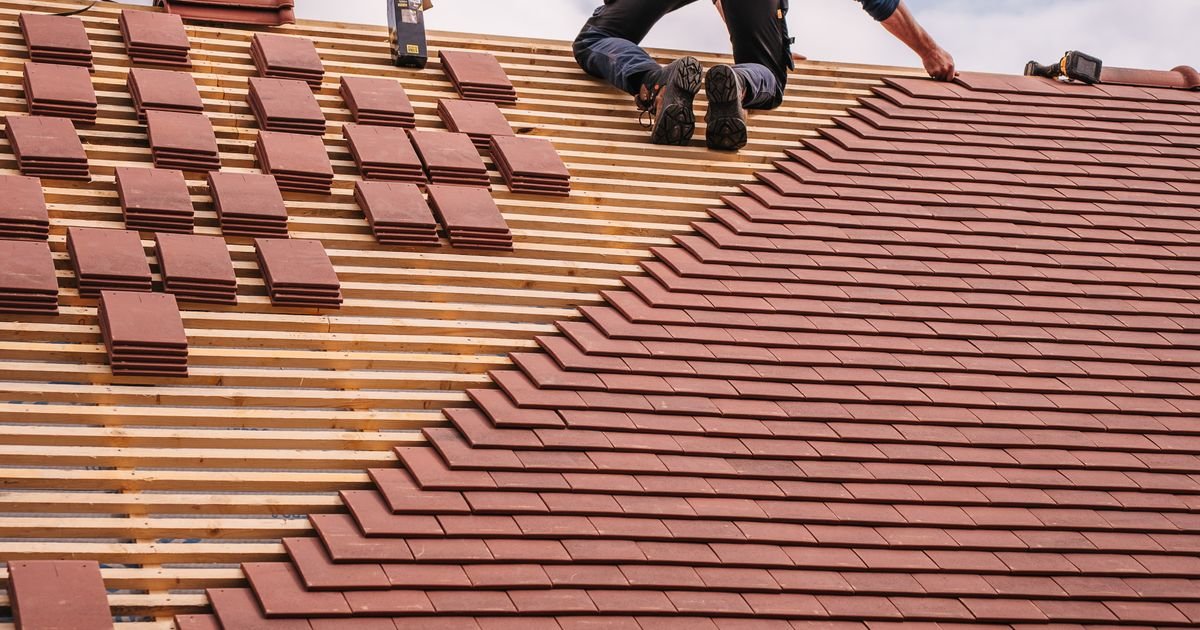


The ridge is the highest line of your roof, and most homeowners never think about it until a cap blows off in a storm or a leak shows up in the attic. That is a shame, because the ridge does three jobs at once. It holds the roof frame together, it seals the joint where the two slopes meet, and on most modern homes it vents the attic.
A ridge cap repair costs $200 to $750 for most homeowners, with a national average near $475, according to Angi data updated in October 2026. Full ridge cap replacement runs $6 to $10 per linear foot. This guide explains what a roof ridge is, how it is built, what it costs to fix, and how to tell when a small ridge problem is turning into a roof problem.
What Is a Roof Ridge
A roof ridge is the highest horizontal line of a pitched roof, the line where two roof slopes meet at the top and form the peak. Stand in front of a gable roof and look at the top edge running from one end to the other. That edge is the ridge. Every pitched roof has one or more ridges. Flat roofs do not, because they have no peak where two slopes meet.
The ridge is both a structural joint and a weather seal. Underneath, the rafters from each slope meet at a ridge board or a ridge beam. On top, ridge cap shingles or tiles cover the joint so rain and wind cannot get into the seam. On many modern roofs, the ridge also carries a ridge vent that lets hot air out of the attic. The roof underlayment runs beneath the field shingles and up to the ridge, but it is the cap that takes the weather at the very top.
Three nearby terms get mixed up with the ridge, so it helps to separate them. The peak is the same thing as the ridge on a simple gable roof, just a plainer word for the highest line. The rake is the sloped edge of the roof along a gable end wall, running from the eave up to the peak. It is not the ridge. A hip is the sloped outside corner where two roof planes meet at an angle and run down from the ridge toward a corner of the house. Ridges run level across the top, hips run down at an angle, and rakes run up a gable end.
What the Ridge Does for Your Roof
The ridge earns its place at the top of the roof by doing four jobs.
It holds the frame together. The rafters from both slopes meet at the ridge, so the ridge is the spine of the whole roof frame. Without a straight, solid ridge member, the slopes can spread, sag, or rack out of square over time.
It keeps water out. The joint where two slopes meet is a natural weak point. Ridge caps overlap the field shingles on both sides and shed water down the slopes, so the seam itself never takes a direct hit from rain.
It vents the attic. A ridge vent turns the peak into a continuous exhaust vent. Hot, moist air rises out through the ridge while cooler air enters through the soffits, and that airflow protects the shingles, the deck, and the insulation below.
It finishes the look. A clean, straight ridge line with matching caps is what makes a roof look finished rather than patched together. Crooked or mismatched caps are visible from the street, and buyers notice them.
The Parts of a Roof Ridge
Five components make up a ridge, from the framing inside to the cap outside.
- Ridge board: a horizontal board running the full length of the ridge that gives the rafters something to nail to and keeps them aligned. In most stick built homes it is 1 by 8 or 2 by 8 lumber.
- Ridge beam: a structural beam that carries the full load of the rafters. Beams replace boards where the ceiling is vaulted or the span is wide.
- Rafters or trusses: the sloped framing members that meet at the ridge and carry the roof load down to the walls.
- Ridge cap: the outermost layer, preformed shingles, formed metal, or shaped tiles that cover the joint and shed water.
- Ridge vent: a continuous vent set into the peak beneath the cap on vented roofs, usually with a baffle that blocks rain, snow, and insects while air passes through.
Ridge Board vs Ridge Beam vs Trusses
The framing at the ridge is where most of the confusion lives, because three different systems can sit in the same place.
A ridge board is a non load bearing alignment member. It holds the rafter ends in line and gives them a nailing surface, but it does not carry the roof load. The load is carried by the triangle formed by the rafters, the ceiling joists, and the rafter ties at the wall plates. Most older homes and many new ones use ridge boards, and they work well on ordinary spans with a proper tie system.
A ridge beam is a structural member that carries the full load of the rafters down to posts or bearing walls. Beams are used for vaulted ceilings and cathedral ceilings, where there are no ceiling joists to form a triangle, and for wide spans and timber frame construction. A ridge beam must be engineered and sized for the load it carries, which is why it is usually a laminated beam or a solid timber rather than a plain board.
Trusses are factory built triangular frames that arrive on site as complete units. A truss roof has no ridge board at all. The trusses are tied together with purlins, and the purlins and the decking provide the lateral support that a ridge board would give in a stick built roof. Once the roof is finished, a truss roof looks the same as a stick built roof from the outside.
Building codes draw a clear line here. The International Residential Code distinguishes ridge boards from ridge beams, and if continuous ties are not present, the code requires a ridge beam instead of a ridge board on slopes below 3:12. If you are planning a vaulted ceiling or removing ceiling joists, that decision is made by an engineer, not by a roofer on site.
Ridge Cap Materials by Roof Type
The cap must match the roofing material, because it has to flex, expand, and weather at the same rate as the field. Here is what goes on the ridge for each common roof type, with real 2026 material costs.
| Roof Type | Ridge Cap Material | Material Cost per Linear Foot | Typical Life |
|---|---|---|---|
| Asphalt shingle | Preformed ridge cap shingles | $2 to $4 | 20 to 30 years |
| Metal roof | Formed metal ridge cap, galvanized steel about $2.50 | $2.50 and up | 40 to 70 years |
| Tile roof | Mortared or dry fix ridge tiles | $8 to $12 | 40 to 60 years |
| Slate roof | Custom ridge slates or lead flashing | Highest, priced per job | 75 to 100 years |
| Composite roof | Preformed composite caps | $4 to $7 | 30 to 50 years |
Material costs come from Angi data updated in October 2026, the Tile Roofing Industry Alliance member survey for tile caps, and 2026 planning ranges for metal and composite caps. Installed prices run higher, because labor is the larger share of any ridge job.
Cap products are sold by the bundle, and coverage varies by brand. A bundle of the GAF preformed cap covers about 25 linear feet and retails near $64 to $68. Owens Corning ProEdge covers 33 linear feet per bundle at $58 to $72. CertainTeed Mountain Ridge covers 20 linear feet per bundle at $52 to $68. Those are October 2026 retailer listings, and prices move by region and color, so treat them as planning figures and add 10 percent for waste and cuts.
One warning matters more than the price. Some low cost roofers cut ordinary 3 tab shingles into strips and use them as ridge caps instead of the manufacturer preformed cap. The strips crack at the fold, they do not seal the same way, and they can void the enhanced manufacturer warranty. CertainTeed lists its matching hip and ridge accessory as a condition of upgraded wind warranties and algae warranties of up to 30 years. Always ask for the maker cap by name on the written estimate, and check the GAF or CertainTeed product name on the material delivery ticket when the job starts.
Roof Ridge Vents: How They Work
A ridge vent is a continuous vent cut into the peak that runs the full length of the ridge, hidden beneath the ridge cap. Installers leave a slot about 1 to 2 inches wide along the peak, set the vent over it, and cover the vent with cap shingles. From the ground, a vented ridge looks the same as a solid one.
The vent works as half of a system. Cool air enters through the soffit vents at the eaves, rises through the attic as it warms, and exits through the ridge vent. That steady airflow does four things: it lowers attic temperature in summer, it carries moisture out before it can condense on the deck, it slows mold and rot in the framing, and it keeps shingles cooler so they last longer. The National Roofing Contractors Association publishes ventilation guidance that roofers follow when sizing intake and exhaust, and the general rule is that intake and exhaust must balance.
There are two types of ridge vent. An unbaffled vent is a simple slotted cover, and it works in mild climates. A baffled vent has an internal channel that pulls air through while blocking rain, snow, dust, and insects. Baffled vents cost more, but they are the standard choice in most of the United States because they keep weather out during wind driven rain.
A ridge vent is not the right call on every roof. It needs soffit intake to work, so a roof with sealed eaves or no soffit vents gets little benefit from a ridge vent alone. On a roof that already has large gable vents, a ridge vent can short circuit the airflow, pulling air from the gable vents instead of from the soffits. And in wildfire country, any vent is an ember entry point, so local code may require ember resistant vent covers. If your attic has no soffit vents, fix the intake first and add the ridge vent as part of the same job.
The Ridge on Different Roof Types
The ridge changes shape with the roof, and the shape changes the cost.
Gable roofs have one straight ridge running the full length of the house. It is the simplest and cheapest ridge to build, cap, and vent, and it gives the best airflow because the vent runs uninterrupted.
Hip roofs have a shorter central ridge plus four hips running down to the corners. A hip roof has far more cap length per square foot of roof than a gable roof, which is why hip roofs cost more to cap and vent. A pyramid hip roof has no ridge at all. All four hips meet at a single point at the top.
Gambrel and mansard roofs have a stepped or segmented ridge where the pitch changes. The caps at each pitch change need careful cutting and sealing, and the ridge is shorter than the roof looks from the street.
Complex roofs with intersecting gables, dormers, and valleys have multiple ridges at different levels. Each intersection needs flashing and each ridge needs its own cap run. The more ridge length a roof has, the more the ridge work costs, and that is one reason complex roofs carry higher replacement estimates. A chimney cap sitting near a ridge intersection is a common leak point, and the flashing where the chimney meets the roof deserves the same attention as the ridge itself.
Flat roofs have no ridge, no peak, and no ridge vent. Ventilation on a flat roof is handled through other vent types.
How Much Ridge Work Costs in 2026
Ridge work is priced by the linear foot, not by the square, because the ridge is a line item on its own. These are national 2026 ranges, and real prices vary by region, pitch, and access.
| Job | Typical Range | Source |
|---|---|---|
| Ridge cap repair | $200 to $750, average $475 | Angi, October 2026 |
| Ridge cap replacement | $6 to $10 per linear foot | Angi, October 2026 |
| Vented ridge cap replacement | $10 to $14 per linear foot, average total $720 | Angi, October 2026 |
| Ridge vent installed | $10 to $25 per linear foot | RoofTake, 2026 |
| Full ridge rebuild, cap plus board plus vent | $400 to $2,000 and up | Industry guides, 2026 |
A worked example makes the math concrete. A 2,400 square foot two story colonial with a gable roof has about 50 linear feet of ridge, and cap replacement runs about $250 to $600 installed. The same house with a hip roof has about 130 linear feet of ridge and hip cap, and the same job runs about $650 to $1,560. Steep pitches above 6:12, two story heights, and difficult access all push labor higher, and most roofers charge a minimum service fee on small repair visits, so a ten foot cap repair can cost more per foot than a full ridge replacement.
Prices also move by region. Expect higher labor in the West and Northeast and lower labor in the South, and always get the ridge listed as its own line item on the estimate so you can compare it across bids. Our guide to average roof replacement cost explains how the ridge line fits into a full reroof bid.
How to Measure Your Ridge Length
You can measure ridge length yourself in a few minutes, and it is worth doing before you call for estimates, because ridge length is what drives the price.
- Measure the peak. From the ground, measure along the peak from one end of the ridge to the other. On a gable roof, that is the length of the house plus the overhang at each gable end. A long tape and a helper make this easy, or measure the building length from the plans and add the overhangs.
- Measure each ridge separately. On a complex roof, measure every ridge run on its own and add them together. Measure hips separately too, since hips take the same cap product and are priced the same way.
- Add waste. Add 10 percent to the total for cuts, overlaps, and the end caps. A 50 foot ridge becomes 55 feet of cap material.
- Convert to bundles. Divide the total by the coverage of the cap you are buying. A 55 foot need divided by 25 feet per bundle of the GAF cap is 2.2 bundles, so buy 3. At about $64 to $68 a bundle, that is about $192 to $204 in cap material, plus nails and a tube of roof cement for the end cap.
Estimates list ridge length separately for a reason. Ridge and hip lengths set the cap and vent quantities, and those are priced per linear foot apart from the field shingles. When two bids differ by hundreds of dollars, a different ridge length is often the cause, so ask each bidder to show the measurement.
Common Ridge Problems and What Causes Them
The ridge takes the worst weather on the roof, so it shows damage first.
Cap blow off. Strong wind lifts caps that were nailed poorly, sealed poorly, or left to age until the sealant failed. Caps on the windward ridge go first, and a missing cap leaves the seam open to the next rain.
Leaks at the ridge line. Gaps between caps, cracked caps, or failed sealant let water into the attic. A ridge leak often shows up as a stain on the top floor ceiling or on the attic side of the deck, far from where the water entered. If you see a stain like that, a roof leak repair inspection should start at the ridge.
Clogged or damaged ridge vent. Dust, ice, debris, and pest nests block the vent slot and stop airflow. A blocked vent traps heat and moisture in the attic, which ages shingles early and feeds mold.
Cracked or missing caps. Sun, freeze and thaw cycles, and falling limbs crack caps over time. A cracked cap looks minor from the ground, but every crack is a water entry point.
Sagging or rotted ridge board. A long term leak or chronic poor ventilation rots the ridge board and the rafter ends. A sagging ridge line visible from the street is a structural warning, not a cosmetic one.
Mold and rot in the attic. Persistent moisture from a ridge leak or a blocked vent rots decking and framing and grows mold on the underside of the deck. By the time you smell it in the house, the damage is usually well along.
Poor installation. The most common shortcut is using cut 3 tab shingles instead of the manufacturer cap. Other shortcuts include mixing cap brands, skipping caps on dormers and less visible ridges, and nailing caps so the nails miss the deck. These faults often show up within a few years on an otherwise new roof, and they are the reason to check the cap product name on the estimate before the job starts.
Repair or Replace: How to Decide
Most ridge problems are fixed with a cap only repair, but some need a full rebuild, and a few mean the whole roof is due.
Repair the caps only when the caps are cracked or missing, the roof still has ten or more years of life, the deck is sound, and the vent is clear. A cap only replacement for a 50 to 80 foot ridge runs about $400 to $1,200, and it is the most common ridge job there is.
Rebuild the ridge when the ridge board is sagging or rotted, leaks keep coming back after cap repairs, or the vent is crushed or chronically blocked. A rebuild replaces the board or beam section, the vent, and the caps, and it needs a roofer who can work the framing as well as the shingles.
Replace the whole roof when the ridge problems come with field shingles near the end of their life, widespread granule loss, or deck damage in more than one area. Paying for a ridge rebuild on a roof with two years left is money spent twice.
Call a roofer promptly if you see cracked, loose, or missing caps, persistent attic leaks or high humidity, a sagging or warped ridge line, or mold and a musty smell near the top floor ceiling. A residential roof repair inspection can tell you in one visit whether the fix is a cap job or something bigger, and catching it early is what keeps a $475 repair from becoming a $2,000 rebuild.
Ridge Maintenance Checklist
The ridge needs little care, but it needs regular eyes on it. Inspect the ridge line twice a year, in spring and fall, and after every severe storm. Walk the ground with binoculars and look for cracked, loose, or missing caps and for any dip or wave in the ridge line. Check that the ridge vent is clear of debris and that no birds or insects have nested in it. Clear moss and leaves off the caps, since trapped moisture ages them early. Inside the attic, look for daylight at the peak, water stains on the deck, and any musty smell near the top of the house. Replace damaged caps promptly, because a ridge left open to rain does not heal itself. The counter flashing and drip edge deserve the same twice yearly look, since they guard the other edges of the same roof.
DIY vs Hiring a Roofer
Replacing a few ridge caps on a low slope ranch roof is a job an experienced homeowner can do with the right safety gear and a calm, dry day. Most ridge work belongs to a roofer. The ridge is the highest and steepest working point on the house, the work needs a harness and proper ladder setup, and a mistake at the peak leaks straight into the attic. Vent work, board repairs, and anything on a steep or complex roof should go to a licensed roofer, and the warranty case is strong too, since the best manufacturer warranties require the maker cap installed by a credentialed contractor. For a full assessment, a residential roofing contractor can inspect the ridge, the vent, and the attic in one visit and quote the cap job and the vent job separately so you can see what each part costs.
Frequently Asked Questions
What is a roof ridge? The roof ridge is the highest horizontal line of a pitched roof, where two roof slopes meet at the top and form the peak. It runs the length of the roof on a gable roof, and it is covered by ridge cap shingles or tiles that seal the joint.
What is the difference between a ridge and a hip? A ridge is the level line at the very top where two slopes meet. A hip is the sloped outside corner where two roof planes meet at an angle and run down from the ridge toward a corner of the house. Both get the same cap product, and both are priced per linear foot.
How long does a roof ridge last? A well built ridge lasts as long as the roof itself, generally 20 to 30 years for asphalt shingle caps and 40 to 70 years for metal caps. Caps are the wear item, so they may need replacement once during the life of the field shingles, while the board or beam underneath lasts the life of the house unless it rots.
Do I need a ridge vent? Most homes benefit from one, and many building codes require attic ventilation, but a ridge vent only works with soffit intake. If your eaves are sealed or your attic already has large gable vents, talk to a roofer before adding a ridge vent, because the airflow path matters more than the vent itself.
How much does ridge cap replacement cost? Ridge cap replacement runs $6 to $10 per linear foot installed in 2026, and a typical repair runs $200 to $750 with an average near $475. Vented caps cost more, at $10 to $14 per linear foot, and a full ridge rebuild can run $400 to $2,000 or more.
Can you replace ridge caps without replacing the whole roof? Yes. Cap only replacement is the most common ridge job. The old caps come off, the vent is checked, new preformed caps go on, and the field shingles stay in place. It only makes sense while the field shingles still have years of life left.
Can a leaking ridge be patched? Roofing cement can stop a small ridge leak for a while, but it is a temporary patch, not a repair. The lasting fix is replacing the damaged caps, resealing the joints, and checking the vent and the board underneath for rot.
Why does my estimate list ridge length separately? Ridge and hip lengths set the cap and vent quantities, and those are priced per linear foot apart from the field shingles. Accurate ridge measurement is part of why professional estimates differ from ballpark figures, so ask each bidder to show the length they measured.
The ridge is a small part of your roof, but it guards the highest and most exposed joint on the whole house. Check it twice a year, fix damaged caps promptly, and use the manufacturer cap that matches your shingles. If the ridge line is sagging, the attic smells musty, or a leak keeps coming back after repairs, get a professional inspection before the damage spreads. See our guides to roof underlayment and average roof replacement cost for the rest of the roof system, or contact our team for a free inspection and an itemized ridge repair quote.