

If you typed "architect shingles" into a search engine, you almost certainly mean architectural shingles. The two phrases point at the same product, and contractors, manufacturers, and roofing guides use the longer name. Architectural shingles are also called dimensional shingles or laminate shingles, and they are now the standard choice for most residential roof replacements in the United States.
This guide explains what architect shingles actually are, how they are built, what they cost in 2026, how long they last, and when a different product makes more sense. For the broader picture of asphalt roofing before you compare types, start with our asphalt roof guide, the pillar article for this cluster.
What Are Architect Shingles
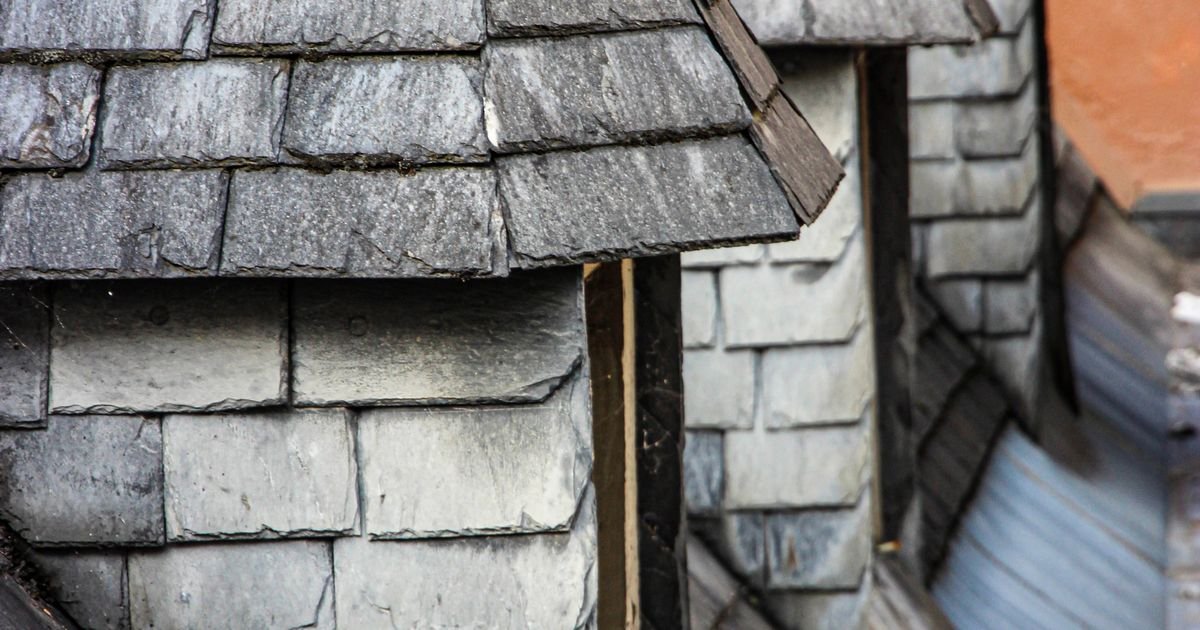
An architectural shingle is an asphalt shingle made by laminating two or more layers of asphalt coated fiberglass mat together. The layers are cut into varied tab shapes and sizes, so the finished roof has depth, shadow lines, and texture instead of the flat, repeating pattern of a traditional 3 tab shingle. That layered look is why the product is called dimensional: from the street, the roof reads as textured and substantial, closer to wood shake or slate than to a flat asphalt surface.
Under the surface, the construction is straightforward. A fiberglass mat gives the shingle strength and flexibility. Asphalt coating waterproofs it. Ceramic coated mineral granules on the surface provide color and protect the asphalt from sunlight. A sealant strip bonds each shingle to the course below once the sun warms the roof. Architectural shingles use more material at every step than 3 tab shingles, which is why they weigh more, resist wind better, and last longer.
The major manufacturers all sell architectural lines. CertainTeed sells the Landmark family, GAF sells Timberline HDZ, and Owens Corning sells Duration. The brand matters less than the exact line on your quote, because each manufacturer sells several architectural tiers at very different prices.
Architect Shingles vs 3 Tab Shingles
The comparison below is the decision most homeowners actually face. A 3 tab shingle is a single flat layer cut into three uniform tabs. An architectural shingle is a laminated, multi layer product with varied tabs. Everything else follows from that one difference.
| Feature | 3 Tab Shingles | Architect Shingles |
|---|---|---|
| Construction | Single flat layer | Two or more laminated layers |
| Weight per square | About 180 to 240 lbs | About 240 to 340 lbs |
| Typical lifespan | 15 to 25 years | 25 to 30 years or more |
| Wind rating | About 60 to 70 mph | About 110 to 130 mph |
| Installed cost per square | About $350 to $550 | About $450 to $900 |
| Appearance | Flat and uniform | Dimensional with shadow lines |
The weight difference is the easiest way to feel the gap in quality. Pick up a bundle of each and the architectural bundle is noticeably heavier. That extra material is what buys the longer life and the higher wind rating, and it is also why architectural shingles now account for the large majority of residential replacements. For the full side by side breakdown, see our guide to 3 tab shingles vs architectural.
There is one case where 3 tab still wins: a roof you plan to replace within a few years, a rental, or an outbuilding where appearance and lifespan matter less than the lowest upfront price. For a home you plan to keep, the price gap is usually too small to justify the shorter life.
How Much Do Architect Shingles Cost in 2026
Installed cost is where published figures vary most, because region, roof complexity, and product tier move the number more than the shingle type alone. Across current 2026 contractor and cost guides, a realistic national range is $450 to $900 per square installed, which is $4.50 to $9.00 per square foot. For a typical 2,000 square foot roof, that puts the project at roughly $9,000 to $18,000, including tear off, underlayment, flashing, and labor, with complex or steep roofs landing above that range.
| Cost element | Typical 2026 range |
|---|---|
| Materials only per square | $100 to $250 |
| Installed per square, standard architectural | $450 to $650 |
| Installed per square, premium or designer architectural | $650 to $900 |
| Installed per square foot | $4.50 to $9.00 |
| Typical 2,000 sq ft roof, installed | $9,000 to $18,000 |
Materials alone tell only part of the story. Standard architectural materials run about $100 to $130 per square, mid range lines about $130 to $160, and premium lines about $160 to $250, with impact resistant lines near the top of that range. Labor is usually the larger share of an installed quote, and it rises with roof pitch, number of valleys and penetrations, tear off layers, and local wage rates.
What moves your quote inside that range:
- Product tier. A basic architectural line and a premium designer line can differ by $100 or more per square in materials alone. Make sure every quote names the exact line, not just "architectural shingles."
- Roof complexity. Valleys, dormers, skylights, chimneys, and steep slopes all add labor and flashing work.
- Tear off and deck repair. Removing one old layer is standard; two layers, or rotted decking found underneath, adds cost that no honest quote can fix in advance.
- Ventilation and underlayment upgrades. Ridge vents, ice and water shield in valleys and eaves, and synthetic underlayment add modest cost and real lifespan.
- Region and code. Hurricane and high wind regions require enhanced fastening and rated products, which cost more than a basic install in a mild climate.
For current material pricing in context, see our guide to roofing shingles prices. And before you accept any quote, check what it includes: underlayment type, flashing replacement, ventilation, cleanup, and warranty registration should all be written down, not assumed.
How Long Do Architect Shingles Last
A realistic lifespan for standard architectural shingles is 25 to 30 years in most climates, with premium lines reaching 30 to 40 years and some top tier products lasting 50 years under favorable conditions. Warranty language is longer than real life: many architectural lines carry lifetime limited warranties, but "lifetime" in warranty terms means the expected service life of the product as defined by the manufacturer, not an endless promise, and coverage for labor and full replacement usually steps down after an initial period.
Four factors decide whether your roof lands at the low or high end of that range:
Ventilation. Attic heat is the quiet killer of asphalt shingles. A poorly ventilated attic bakes shingles from below, curls edges early, and can void warranty coverage. Ridge vents paired with soffit intake are the standard fix, and they cost far less than a premature replacement.
Installation quality. Nail placement, number of nails per shingle, flashing details at walls and chimneys, and valley construction matter as much as the shingle brand. The National Roofing Contractors Association publishes guidance on vetting a contractor, and it is worth reading before you hire, because most early failures are installation failures, not material failures.
Climate. Intense sun, freeze thaw cycles, hail, and coastal salt air all shorten shingle life. In hot southern states, a 30 year rated architectural roof may realistically deliver 20 to 25 years. In mild climates with good ventilation, the same product can pass 30 years without trouble.
Maintenance. Clearing debris from valleys and gutters, trimming overhanging branches, and fixing small flashing leaks promptly will add years. Architectural shingles are low maintenance, not no maintenance, and a roof that is never inspected will fail earlier than one checked every couple of years.
Our guide to asphalt shingle roofs covers the full range of asphalt roof types and lifespans if you are comparing architectural shingles against luxury designer lines as well.
Wind, Impact, and Fire Ratings Explained
Ratings are printed on the product specification sheet, not in the product name, so read them before you buy.
Wind. Standard architectural shingles are typically rated for 110 mph winds, with many lines rated to 130 mph when installed as a complete system with the manufacturer's starter strips and hip and ridge products. That is roughly double the 60 to 70 mph rating of a basic 3 tab shingle, and it is the single biggest performance reason to choose architectural over 3 tab in storm regions.
Impact. Impact resistance is a separate rating, tested under UL 2218, and it runs from Class 1 to Class 4, with Class 4 the highest. Not every architectural shingle is impact resistant. If hail is a concern where you live, ask for the Class 4 version of your chosen line by name, and check whether your insurer offers a discount for it, because many do.
Fire. Most architectural asphalt shingles carry a Class A fire rating, the highest, when installed with the recommended underlayment. That rating matters for code compliance and insurance in wildfire prone areas, but it does not make an asphalt roof fireproof, and ember protection still depends on vents, flashing, and defensible space around the home.
Slope limits. Asphalt shingles, including architectural lines, require a minimum roof pitch of 2:12, meaning the roof rises 2 inches for every 12 inches of horizontal run. Between 2:12 and 4:12, manufacturers require a double layer of underlayment and specific low slope details. Below 2:12, asphalt shingles are not appropriate at all, and a low slope membrane system is the correct choice.
Pros and Cons of Architect Shingles
Pros:
- Longer life than 3 tab for a modest premium. Roughly 20 to 40 percent more upfront than 3 tab buys roughly double the wind rating and 10 or more extra years of service.
- Better curb appeal. Dimensional texture and shadow lines look like a premium roof from the street, which matters for resale and for homes with prominent rooflines.
- Strong wind performance. 110 to 130 mph ratings cover most storm conditions outside hurricane zones with special code requirements.
- Wide choice. Every major manufacturer offers architectural lines in dozens of colors, including algae resistant blends for humid climates.
- Familiar to every roofer. Installation, repair, and matching are straightforward, and spare bundles are easy to source for years after install.
Cons:
- Heavier than 3 tab. At 240 to 340 lbs per square, architectural shingles add structural load. Most framed roofs handle it without issue, but a structural check is wise on very old homes.
- Not the cheapest option. If budget is the only factor and the roof will be replaced soon anyway, 3 tab costs less upfront.
- Not a luxury look. Architectural shingles imitate shake and slate, but they do not match the depth of true luxury designer shingles or real slate, and a buyer who wants that look should compare designer lines before settling.
- Color varies by lot. Shingles from different production lots can vary slightly in shade, so order the full quantity plus spares up front and keep the wrapper for future repairs.
- Warranty fine print. The best warranty terms usually require a complete system from one manufacturer, installed by a credentialed contractor, and registered after install. Read those conditions before you assume you have them.
How to Buy Architect Shingles Without Overpaying
First, decide the tier, not just the type. A quote that says "architectural shingles" without naming the line is not comparable to another quote that names Landmark, Timberline HDZ, or Duration. Ask each contractor to name the manufacturer, the exact line, the underlayment, the starter and ridge products, and the ventilation plan, in writing.
Second, compare installed quotes, not material prices. A low material price with thin underlayment, reused flashing, and no ventilation upgrade is not a bargain. A slightly higher quote that replaces flashing, adds ridge ventilation, and registers the warranty is usually the better buy.
Third, check the installer, not just the shingle. Manufacturer certified installers can offer stronger warranty terms, including extended wind coverage and workmanship coverage, that an uncertified installer cannot. Ask for recent local jobs in the same line and color, and look at them from the street before you commit.
Fourth, order spares. Keep one or two bundles from the original production lot for future repairs, and store them dry and flat. A repair with a matching bundle is invisible; a repair with a different lot can show as a patch for the life of the roof.
When you are ready for a professional measurement, our shingle roofing services page explains what an itemized quote includes, and our residential roofing services page covers the inspection and quoting process. If your current roof is leaking and you need matching shingles identified first, our roof leak repair services page explains how an inspection finds the exact line and color already on your roof.
Frequently Asked Questions
What does architect shingles mean? It is the short search form of architectural shingles, the laminated asphalt shingle type also called dimensional or laminate shingles. Two or more layers of asphalt coated fiberglass are bonded together and cut into varied tabs, giving the roof a textured, dimensional look.
Are architect shingles the same as architectural shingles? Yes. "Architect shingles" is how many searchers shorten the name. Manufacturers and contractors use "architectural shingles" or "dimensional shingles" for the same product. If a quote uses a different name, ask for the manufacturer and exact line to be sure you are comparing the same product.
How much do architect shingles cost? Materials run about $100 to $250 per square depending on tier, and installed cost runs about $450 to $900 per square in 2026, or $4.50 to $9.00 per square foot. A typical 2,000 square foot roof lands around $9,000 to $18,000 installed, varying by region, pitch, and complexity.
How long do architect shingles last? Standard architectural shingles realistically last 25 to 30 years, with premium lines reaching 30 to 40 years or more under good ventilation and installation. Lifetime limited warranties are common, but labor and full replacement coverage usually steps down after an initial period, so read the warranty terms.
Are architect shingles better than 3 tab shingles? For most homes, yes. Architectural shingles last roughly 10 or more years longer, carry wind ratings around 110 to 130 mph against 60 to 70 mph for 3 tab, and look substantially better, for roughly 20 to 40 percent more upfront. The 3 tab case is strongest for short term roofs, rentals, and outbuildings.
Do architect shingles need special underlayment? On normal slopes, standard synthetic underlayment is typical. On low slopes between 2:12 and 4:12, manufacturers require a double layer of underlayment. Ice and water shield in valleys, eaves, and around penetrations is standard good practice in cold and storm climates regardless of slope.
Can architect shingles be installed over old shingles? Many codes allow one overlay layer, but a tear off is usually the better choice. An overlay hides deck damage, traps heat, adds weight, and can shorten the new roof life. A tear off lets the roofer inspect the deck, replace flashing properly, and install underlayment and ventilation correctly.
Which architect shingle brand is best? CertainTeed Landmark, GAF Timberline HDZ, and Owens Corning Duration are the most installed architectural lines, and all three are strong products. Choose by the exact line, local pricing, color availability, and your installer's certification with that brand, because certified installation unlocks better warranty terms than the logo alone.
Comparing types before you decide? Read our guide to 3 tab shingles vs architectural and asphalt vs architectural shingles, then check roofing shingles prices for installed cost ranges. For a professional measurement and an itemized quote, contact our team.