
Your new standing seam roof went on last week and it looks great at noon. Then the late afternoon sun hits it and the flat parts of the panels look wavy, like ripples across a pond. Nothing is leaking. Nothing is loose. But the roof you paid a premium for does not look flat.
That waviness has a name: oil canning. It is one of the most common complaints homeowners raise after a metal roof goes on, and it is also one of the most misunderstood. It is almost always cosmetic, it is almost never covered by a warranty, and the time to deal with it is before the panels are ordered, not after they are on the roof.
This guide explains what oil canning is, what causes it, which roofs get it worst, how to tell it apart from a real problem, what it costs to fix, and exactly what to put in your contract so you are not surprised by it.
What Is Oil Canning on a Metal Roof?
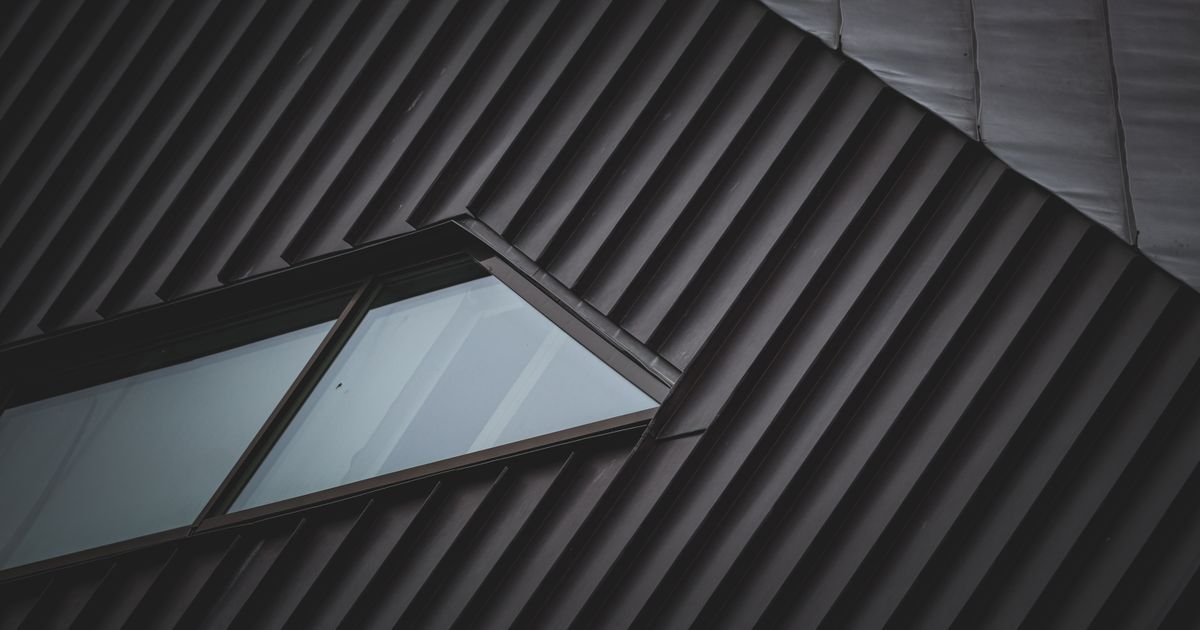
Oil canning is visible waviness or rippling in the flat areas of a metal roof panel, the broad flat pan between the seams. The Metal Construction Association, the trade group for metal roofing makers, defines it as perceived waviness in the flat areas of roofing and wall panels, and notes that it is an inherent part of light gauge cold formed metal products, particularly those with broad flat areas.
The name comes from the old fashioned oil can. Press on the flat bottom of one and the metal pops and ripples. A roof panel does the same thing when internal stress in the sheet forces the flat metal to buckle slightly out of plane. The technical name is elastic buckling, also called stress wrinkling.
A few things about how it looks are worth knowing before you judge your own roof:
- It shows most on wide, smooth, flat panels, and least on ribbed or corrugated profiles where the ribs stiffen the sheet.
- Low angle sunlight makes it far more visible. The same roof can look rippled at 5 in the afternoon and perfectly flat at noon on a cloudy day.
- Dark colors and high gloss finishes act like a mirror and make every wave easier to see. Matte finishes hide it.
- It can appear on steel, aluminum, copper, and zinc. No metal is immune, though some profiles and gauges resist it far better than others.
If you are weighing a standing seam metal roof, oil canning is the one cosmetic tradeoff that comes with the clean, flat look. The wide unbroken pans that make standing seam so attractive are exactly where waviness shows up most.
Is Oil Canning a Defect or Just Cosmetic?
By itself, oil canning is cosmetic. It does not change how the panel sheds water, it does not weaken the panel, and it does not shorten the life of the roof. The National Roofing Contractors Association states plainly that oil canning is not a cause for rejection and that it has no adverse effect on a metal panel’s structural integrity or waterproofing capability. You can read the NRCA’s guidance on metal roofing through the association’s site at nrca.net.
That cosmetic verdict is why warranties treat it the way they do. Metal roofing manufacturers almost universally issue disclaimers about oil canning and do not cover it under their material warranties. Once the panels are installed, oil canning will virtually never be covered. Panels that arrive from the factory with really severe waviness may be rejected before installation, but manufacturers generally insist oil canning is not an acceptable reason for rejection, so the time to protect yourself is before you order, which the contract section below covers in detail.
None of this means you should ignore a wavy roof. Sometimes the waviness points to something else, and the section on telling it apart from real problems explains what to look for. But the waviness itself is not a leak and not a structural failure, and no honest roofer will promise you a roof with zero oil canning, because no manufacturer can guarantee it either.
What Causes Oil Canning?
There is rarely one single cause. Oil canning comes from stresses locked into the metal and stresses added during installation, and several of them usually act together. The causes fall into four groups.
Stress left in the coil at the mill
Metal roofing starts life as a giant coil of sheet metal. Flattening, coiling, and slitting leave residual stress in the sheet, and the metal keeps trying to return to its old shape after it is formed into a panel. The Metal Construction Association lists three common coil conditions behind this: a longer center in the strip, which creates ripples near the middle; a wavy edge, where the strip is longer along one edge; and camber, a slight curve along the length of the coil. A dull or misadjusted slitter blade can add to the problem by stretching the metal as the master coil is cut to panel width. Panels can arrive from the factory already showing waviness.
Roll forming adds its own stress. As the coil runs through the rolling stations, the metal is stretched slightly, especially if the equipment is out of adjustment or pushed past its limits. The machine tries to form a straight edge on a sheet that is not perfectly straight, and the extra stress shows up later as waviness.
Restricted thermal expansion
Metal grows and shrinks with temperature every single day. A standing seam panel needs room to move, and the clips that hold it to the deck are designed to let it slide. If anything pins the panel in place, the panel buckles instead of sliding. Roofing consultant Roof Observations puts it bluntly: restraint like this almost always causes oil canning, and holding a panel at both ends, called double pinning, almost guarantees it.
Pinning happens in ordinary ways. A nail hammered through a panel after the roof is on fixes it at that point. A hole cut too tight around a plumbing vent does the same. Clips that grip the panel leg too hard, or too loosely, create uneven stress. Panels installed too tightly together leave no room for movement at all.
An uneven deck or a moving structure
The deck is the plywood or boards under the panels, and it has to be flat. If it is bowed or out of plane, the panel is pushed and pulled unevenly as it is fastened down, and the stress shows in the flat pan. Building settlement can do the same thing: as a structure settles, the deck deflects, and the panels follow. In one case investigated by Roof Observations, a roof deck sat more than a foot out of plane along the middle of the roof because the structure itself had moved, and the oil canning was a symptom of that, not a roofing defect. This is why the deck should be checked and repaired before any panel goes down, and why a roofer should confirm the deck is in plane before starting. Our guide to roof underlayment covers what sits between the deck and the panels and why that layer matters.
Panel width, thickness, and profile
The wider the flat area, the more room there is to ripple, and the thinner the metal, the easier it buckles. Commonly available standing seam panels run 12 inches to 36 inches wide, with 24 inches the most common. A 12 inch panel will show far less waviness than a 36 inch panel of the same metal. Thickness works the same way: the normal thickness of sheet steel used for roofing is 24 gauge, which is 0.025 inches, and 22 gauge performs better still, while 26 gauge and 28 gauge panels are the ones to worry about on wide flats. For aluminum, the normal thickness is 0.032 inch, and a 25 percent thicker panel at 0.040 inch resists oil canning better.
Profile matters as much as size. Ribbed or corrugated panels resist oil canning well because the ribs stabilize the sheet. Standing seams, by contrast, are not stiffening ribs, so they do almost nothing to stop the pan from rippling. Metal shingles and metal tiles that mimic slate or shake tend not to oil can at all, because the embossed patterns that create the look also act as stabilizing ribs.
Which Metal Roofs Oil Can Most
Not every metal roof carries the same risk. The table below ranks the common choices, from most prone to least.
| Roof type | Oil canning risk | Why |
|---|---|---|
| Standing seam, wide flat pan, 26 or 28 gauge | Highest | Broad flat area, thin metal, seams do not stiffen the pan |
| Standing seam, 24 gauge, 16 inch panels | Moderate | Thicker metal and narrower flats cut the risk sharply |
| Standing seam, 22 gauge with striations | Low | Heavy metal plus ribs rolled into the flat absorb movement |
| 5V crimp and ribbed exposed fastener panels | Low | Ribs across the face break up the flat area |
| Corrugated metal roofing | Lowest | Narrow flutes leave almost no wide flat area to ripple |
| Metal shingles and stone coated steel | Lowest | Embossed patterns act as stabilizing ribs |
The metal itself plays a part too. Steel is the most common choice and the best documented: 24 gauge is the usual baseline, 22 gauge is the upgrade. Aluminum is lighter and needs a thicker sheet, 0.040 inch rather than 0.032 inch, to match steel’s resistance. Copper and zinc weather naturally, dulling and developing a layer of oxidation over time, which hides waviness as the roof ages. Copper also carries the highest repair cost of any common metal, which matters if a panel ever does need replacing. Our guide to standing seam copper roofing covers copper’s cost and lifespan in detail.
Finish is the last lever on appearance. Low gloss and matte finishes show far less waviness than high gloss ones, and clear coat finishes, while good for color retention, tend to produce a high gloss sheen that highlights every ripple. Dark colors make waviness easier to see, not more likely to happen.
How to Tell Oil Canning Apart From Real Roof Problems
Mild waviness in the flat of a panel, worst in low sun and invisible at noon, is oil canning. But four warning signs mean something else may be going on, and each one is worth a roofer’s look:
- It appeared after the roof was finished. Later damage is a common cause: a nail driven through a panel, or a tight hole around a vent pipe, can pin a panel that was flat when it was installed.
- It is getting worse, not milder. Mild oil canning may lessen as the metal settles over several seasons. Waves that keep growing point to a deck that is moving or a panel that is pinned.
- It follows a sag or dip in the roofline. A deck that has moved can be a structure problem, not a roofing problem, and that is a different job entirely.
- Panels look forced or crooked at the seams. That can mean the layout drifted during installation, with panels pulled out of square and stressed as they were fastened.
Hail dents are the other common lookalike, and they are easy to separate: hail leaves round dimples, usually in a random pattern, while oil canning is a long gentle wave running with the panel. If a storm has just passed and the marks are dimples rather than waves, read our guide to hail damage on a metal roof instead. And if you see water inside the house, treat it as a leak and have it inspected at once, because oil canning on its own does not let water in. Our roof leak repair page explains how a leak is traced and fixed.
How to Prevent Oil Canning Before You Order
Nothing can guarantee a roof with zero waviness, and any contractor who promises that is overselling. But five choices made before ordering cut the risk sharply, and each one has a real cost attached, so it helps to see both sides before you sign.
1. Order heavier gauge metal. Moving from 24 gauge to 22 gauge steel is one of the most effective steps, because thicker metal is more rigid and resists the buckling that causes waviness. Panel maker McElroy Metal puts the premium at roughly 20 percent more for the raw material than 24 gauge steel, and some installers charge more labor because heavier panels take more crew to handle. On a roof where appearance matters, that is money well spent.
2. Choose narrower panels. A 16 inch panel shows far less waviness than a 24 inch panel of the same metal. The tradeoff is panel count: on a 100 foot long building, McElroy Metal notes that 75 panels at 16 inches are needed against 67 panels at 18 inches, roughly 10 percent more panels to produce, ship, and install. Narrower panels cost more in material and labor, so this is a real budget decision, not a free upgrade.
3. Specify striations or pencil ribs. Striations are shallow bends rolled into the flat of the panel every few inches. They absorb thermal cycling and break up reflections so waves are hard to see, and most reputable manufacturers do not charge extra for them. Pencil ribs and plank profiles are more visible options that do the same job more aggressively.
4. Pick a low gloss, matte finish. A matte finish hides minor waviness far better than a high gloss one, and a darker matte color hides it better still. Skip the clear coat if appearance is your top concern, since its high gloss sheen highlights ripples.
5. Start from a flat deck and an experienced crew. Require in writing that the installer inspect the deck and confirm it is in plane and free of defects before any panel goes down, and that clips and fasteners are installed exactly to the manufacturer’s instructions, not over driven and not angled. McElroy Metal lists substrate inspection as a step before underlayment, and Roof Observations suggests stretching a string across the roof to check the plane. There is no substitute for a crew that has installed standing seam before and knows how the clips and panels are meant to move.
A sixth step costs nothing and catches the most avoidable problems: inspect the panels on delivery. Panels can arrive wavy from the factory, and it is far easier to flag that before they are on the roof. If excessive waviness shows up during installation, the crew should stop and the owner should review it before work continues.
What to Put in Your Contract
This is the gap almost every competitor guide misses, and it is the part that actually protects you. Because manufacturers exclude oil canning from their warranties, your contract is the only place you can set expectations in writing. Before you sign, ask for these four items:
- Written acceptance criteria for oil canning. Agree in advance what counts as acceptable waviness and what does not, especially on large or highly visible roofs. Without a written standard, a dispute after installation comes down to one person’s word against another’s.
- A delivery inspection clause. Panels are inspected on arrival, before installation, and visibly wavy panels are flagged and replaced rather than installed and argued about later.
- The exact specification in the quote. Gauge, panel width, finish, and pan condition should all be named in writing: 24 gauge or 22 gauge, 16 inch or 24 inch, matte or gloss, striated or smooth. If the quote just says standing seam, you have no record of what was agreed.
- A stop work rule. If excessive waviness appears during installation, work stops and you review it together before the crew carries on.
Ask the contractor to show you a finished roof in person, at different times of day, before you commit. Low afternoon sun is the honest test: if you only ever see a roof at noon, you have not seen what it really looks like.
Can Oil Canning Be Fixed After the Roof Is On?
Usually not without replacing panels, and that is the honest answer most guides bury. Once panels are installed, waviness that came from the coil itself cannot be rolled out of the metal. That is why makers do not accept it as a reason to reject a panel after the fact, and why the prevention choices above matter so much more than any fix.
What can sometimes be corrected is a cause that came later. If a panel was pinned by a nail driven through it, a tight collar around a pipe, or a fastener driven too far, freeing that point lets the panel move again. That is a job for a roofer to look at, not a guess from the ground. Mild oil canning is usually left alone, and it may lessen over several seasons as the metal settles.
When a panel does have to come out, the cost is real. HomeGuide’s February 2026 repair pricing puts replacing metal roof panels at 3 to 14 dollars per square foot, with copper up to 30 dollars per square foot, and moderate to major repairs, including replacing multiple panels, at 600 to 3,500 dollars, against a national average metal roof repair of about 900 dollars. Standing seam panels cost more to replace individually than exposed fastener panels, because the seams must be disengaged on both sides of the damaged panel and neighboring panels often have to come off to reach the clips. Matching the finish matters too: a new panel next to a weathered one can stand out for years.
| Fix | Typical cost | Source |
|---|---|---|
| Minor repair, sealing a gap or patching a hole | 150 to 600 dollars | HomeGuide, Feb 2026 |
| Moderate to major repair, including replacing multiple panels | 600 to 3,500 dollars | HomeGuide, Feb 2026 |
| Panel replacement, galvanized or Galvalume steel | 3 to 14 dollars per sq ft | HomeGuide, Feb 2026 |
| Panel replacement, copper | Up to 30 dollars per sq ft | HomeGuide, Feb 2026 |
| Average metal roof repair overall | About 900 dollars | HomeGuide, Feb 2026 |
Figures vary by region, metal, and access, and they are planning ranges, not quotes. If a contractor quotes a fix, ask whether the price covers matching the panel profile, gauge, and finish, because a mismatched panel can look worse than the waviness it replaced.
Does Oil Canning Affect Home Value or Insurance?
Oil canning does not affect how long a metal roof lasts. A standing seam roof is still a 40 to 70 year roof, and our guide to how long a metal roof lasts covers the lifespan figures in full. What waviness can affect is first impressions. A buyer walking up to a house in late afternoon light will see the ripples, and a picky buyer may use them to negotiate, even though the roof itself is sound. That is a real, if modest, resale consideration on a high visibility roof, and it is another reason the prevention choices are worth making on the street facing slopes at least.
Insurance is simpler: because oil canning is cosmetic and not storm damage, a homeowners claim will not cover it, and a claim filed for it will go nowhere. Hail dents are a different matter, since hail is a covered peril, which is one more reason to know which one you are looking at before you call your insurer.
Frequently Asked Questions
What is oil canning on a metal roof? It is visible waviness or rippling in the flat part of a metal roof panel, the pan between the seams. The Metal Construction Association describes it as perceived waviness in the flat areas of roofing and wall panels, and calls it an inherent characteristic of light gauge cold formed metal. It is cosmetic, not a leak.
Is oil canning a defect? Not in the sense of a leak or a structural failure. The National Roofing Contractors Association states that oil canning is not a cause for rejection and has no adverse effect on a panel’s structural integrity or waterproofing capability. It is an appearance issue, and manufacturers treat it as an inherent characteristic of flat metal rather than a manufacturing defect.
Will my metal roof warranty cover oil canning? Usually not. Manufacturers almost universally exclude oil canning from their material warranties, and it is virtually never covered once installation is complete. Get written acceptance criteria for waviness into your contract before ordering, because the warranty will not protect you after the fact.
Can oil canning be fixed? Usually not without replacing the affected panels. Waviness from the coil cannot be rolled out once panels are installed. A panel that was pinned later, by a nail or a tight pipe collar, can sometimes be freed so it moves again. Mild oil canning may lessen over several seasons as the metal settles.
Does thicker metal prevent oil canning? It helps a lot, but it does not guarantee a flat roof. 24 gauge steel is the common baseline and 22 gauge performs better, while 26 gauge and 28 gauge are the most prone on wide panels. For aluminum, 0.040 inch resists waviness better than the standard 0.032 inch. Even heavy gauge panels will ripple if the deck is out of plane.
Do dark colors make oil canning worse? They make it easier to see, not more likely to happen. Dark colors and high gloss finishes act like a mirror, while matte or low gloss finishes hide waviness better. Low sun at a sharp angle shows ripples that flat midday light does not.
Will oil canning go away on its own? Sometimes it gets milder. Panel makers note that mild oil canning may lessen as the metal settles over several seasons. If it gets worse instead, or it showed up after someone worked on the roof, have a roofer check for a pinned panel or a deck that has moved.
Does oil canning cause leaks? No. Oil canning on its own does not open seams or let water in. A nail through a panel or a tight hole around a pipe is a separate matter, because those can pin the panel and are worth having checked. If you see water inside, treat it as a leak and have the roof inspected.
Planning a metal roof? Compare standing seam metal roofing with the other options in our metal roof cost guide, and check minimum pitch for a metal roof before you order panels. For a free inspection and an itemized quote on a metal roof in Tyler, see our metal roofing and residential roofing services.